
Beethoven’s Symphony No. 6, “Pastoral” was one of his most revolutionary symphonies. Written concurrently with No. 4 and No. 5, Symphony No. 6 expanded the expressive possibilities of instrumental music by embedding programmatic, nature-inspired imagery into a large-scale orchestral work. The symphony premiered at the same concert as Beethoven’s Fifth Symphony at the Theater an der Wien on December 22, 1808.
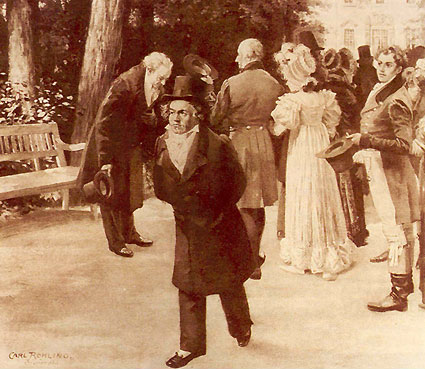
Beethoven loved nature. He frequently left Vienna to compose in rural locations and spent much of his time walking in the countryside. The Sixth is titled “Pastoral” as it is a musical journey through rural life, blending nature’s sounds with human emotion. Beethoven himself wrote, “No one can love the country as much as I do,” so the Sixth Symphony must have had a special place in his heart, given the subject matter.
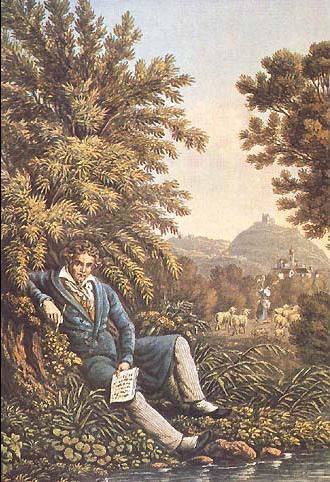
The Sixth stands out as one of his few explicitly programmatic works. At the time, a symphony was mainly an abstract, formal genre. Beethoven’s Sixth is one of his few works with program titles for each movement, like “Awakening of cheerful feelings on arrival in the countryside,” “Scene by the brook,” “Merry gathering of country folk,” “Thunder, storm,” and “Shepherd’s song.” There is room to debate if Beethoven’s Sixth was “program music,” which is music that is intended to convey images or impressions of events, based on the passages that match that description, like the “storm” in the fourth movement. Rather than telling the details of an event, Beethoven was more likely intent on ensuring the listener could experience the peace and tranquility he felt in nature.
The “Pastoral” is one of Beethoven’s two symphonies with composer-given titles and is a landmark in the development of programmatic symphonic music, influencing later Romantic composers. The symphony remains a central example of music inspired by nature and of Beethoven’s ability to merge structural mastery with expressive nature.
Beethoven said: “The whole will be understood even without a description, as it is more a feeling than a tone-painting.”
What to Listen For:
- Movement I: Awakening of Cheerful Feelings on Arrival in the Countryside (Allegro ma non troppo, F major)
The movement begins with a calm, cheerful melody invoking images of a peaceful countryside. Beethoven develops each motif in a way that feels light, fresh, and free flowing, using bright harmonies to evoke the joyful impression of the inviting rural landscape. The music feels expansive and optimistic, as if the listener is stepping onto a serene and sunlit path.
- Movement II: Scene by the Brook (Andante molto mosso, B♭ major)
The sound shifts in the second movement to gentle motion, the undulating strings and woodwinds suggesting an image of a bubbling brook. The water motif continues with two muted cellos while the remaining cellos play pizzicato notes with the double basses. Near the end of the movement, the woodwind instruments imitate bird calls, identified by Beethoven in the score: flutes playing nightingale calls, oboes playing quail sounds, and two clarinets acting as cuckoos. The mood is contemplative and calm, allowing a moment of rest after the exciting arrival in the first movement.
- Movement III: Merry Gathering of Country Folk (Allegro, F major)
The third movement is a scherzo, depicting the first imagery of people interrupting the genteel atmosphere with country folk dancing and a rustic, joyous celebration. The rhythms are vibrant and dancelike, using folk-like motifs to convey communal happiness. The music is also lively and slightly playful, a mischievous hint of the unpredictability of rural life.
- Movement IV: Thunder, Storm (Allegro, F minor)
Movement IV begins without a break from Movement III. The sound shatters, as if the characters were scattering before the approaching storm. Listen for shifting chromatic harmony, asymmetric phrases, and the various “storm” sounds created by the different voices in the orchestra. Beethoven uses “thunder rolls” in the low strings, lightning “flashes” in the woodwinds, drops of “rain” in the violins, and dissonant harmonies to depict the power and unpredictability of nature. The storm grows into a downpour, adding trombones to the climax to heighten the emotional impact. Near the end, a tender call and response played by solo oboe and flute suggests a rainbow appearing through the clouds. The feeling is one of awe and even fear, but also of nature’s sublime force, continuing straight into the next movement without pause.
- Movement V: Shepherd’s Song: Happy and Thankful Feelings after the Storm (Allegretto, F major)
The opening measures of the fifth movement begin by quoting an Alpine horn call, introducing the shepherd’s song of Thanksgiving. It is a simple folk-like melody built from arpeggiated triads (three-note chords played sequentially rather than simultaneously). The melody is gentle and lyrical, expressing peace and thankfulness after the storm. The mood returns to gratitude and reflection, closing the symphony with a sense of harmony restored, both in nature and in the human heart.
The Sixth Symphony is not just a soundscape; it is an emotional journey through the human experience of nature.
Comparison of Beethoven’s Sixth Symphony to the Previous Symphonies:
Symphony No. 6 “Pastoral” stands out from Beethoven’s earlier works for its programmatic, nature-inspired content, five-movement structure, and reflective, gentle character. It is in deliberate contrast to the intense, abstract heroism of his previous symphonies.
- Structural and Formal Differences
- Symphonies Nos. 1-5 followed the traditional four-movement structure of the classical era. In the Sixth, Beethoven adds a fifth movement and gives each a descriptive title. This was unusual in his time, adding a programmatic basis for the work.
- Programmatic vs. Abstract
- Earlier symphonies relied on motivic development and emotional impact without depicting specific scenes. The Sixth symphony depicts nature: brook scenes, rural gatherings, thunderstorms. Beethoven insisted it was more about feeling rather than visualization through tone-painting. The blend of narrative and musical rigor set it apart from the purely formalist approach of prior symphonies.
- Character, Tone, and Mood
- Where the Fifth Symphony (written and premiered alongside the Sixth) is stormy, tense, and triumphant, the Sixth is serene, lyrical, and celebratory. The Fifth’s opening motif is compressed and aggressive, driving toward a climactic resolution; the Sixth’s opening is relaxed, evoking the joy of rural life. This shift in character reflects Beethoven’s deep love of nature, which he often sought in the countryside, and his Romantic idealization of the natural world.
- Musical Language and Accessibility
- Beethoven used simple, folk-like themes and even included specific bird calls in the score. This made the music accessible and relatable, while still maintaining the complexity and depth expected of a major symphony. The combination of folk elements, vivid imagery, and emotional depth was unprecedented in the symphonic tradition.
- Historical Context and Beethoven’s Life
- Composed during a period when Beethoven was coping with worsening deafness, the symphony’s focus on nature and joy was both a personal refuge and a public statement of optimism. This personal and artistic fusion gave it a deeper, more humanistic appeal. Amidst the shadow of the French Revolutionary and Napoleonic Wars, and broader political upheaval on the continent, many artists looked to nature for inspiration. The rise of Romanticism emphasized personal emotion, the sublime in nature, and a rejection of strict classical formalism. Beethoven’s Sixth reflects this shift – nature’s “expression of feeling” rather than mere imitation.
Fun fact: Beethoven’s Symphony No. 6 was used in the fifth segment of Disney’s original Fantasia (1940). You might remember the iconic scene featuring a family of pegasi (mythical winged horses).
In short, Symphony No. 6 “Pastoral” was revolutionary because it broke the mold of the abstract symphony, integrated narrative and emotional storytelling, and celebrated nature as a moral and aesthetic ideal. It also expanded orchestral and formal possibilities, all while appealing to the Romantic spirit of the age.
Just like Beethoven’s original patrons for the premiere concert, you can experience the full symphonic journey of Beethoven’s Symphonies No. 5 & 6 with Pacific Symphony on February 4, 2027.
Don’t miss Symphonies No. 1 & 2 January 28, 2027, or Symphonies No. 3 & 4 on January 29, 2027. Read more about each symphony here:
Leave a Reply