
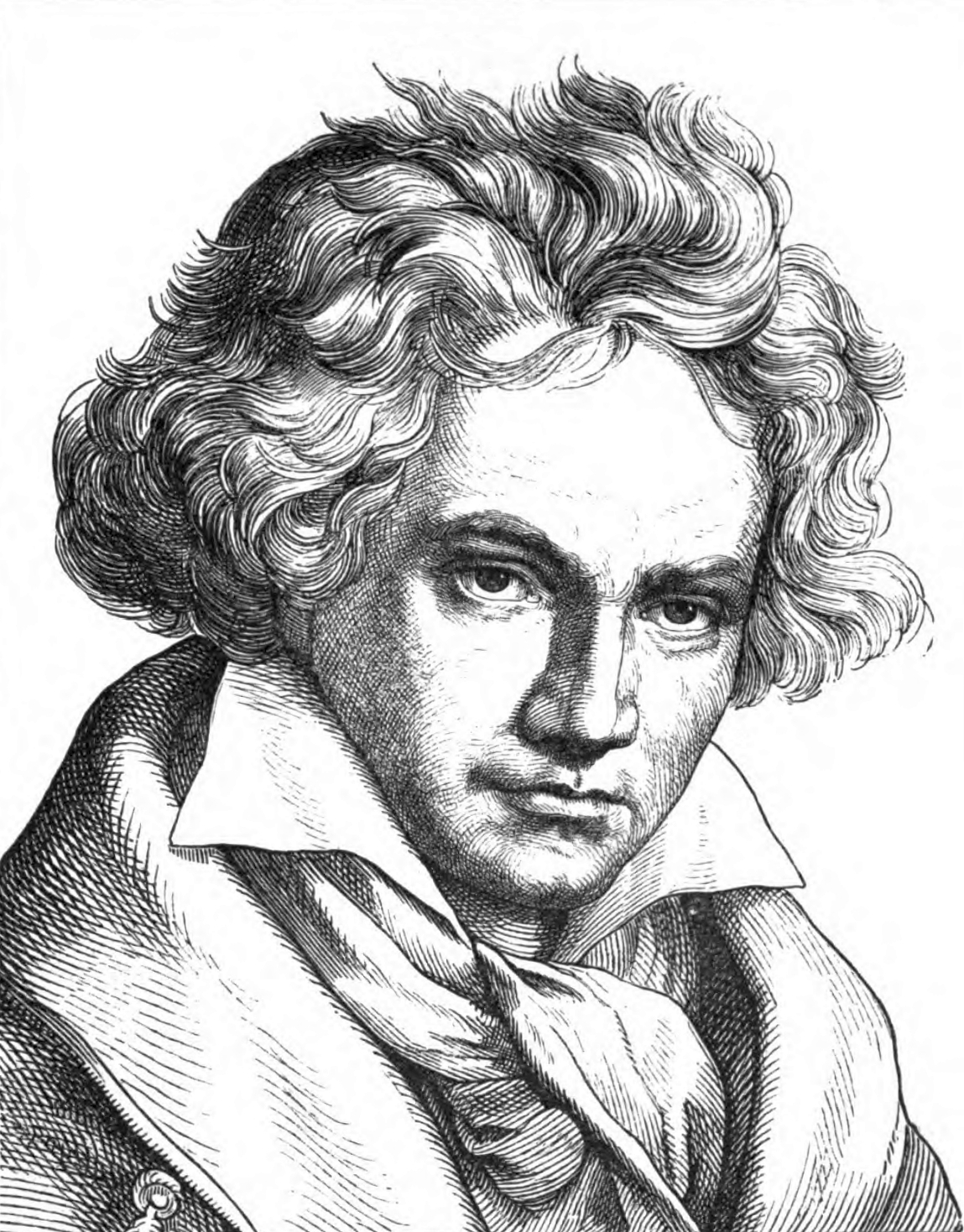
Beethoven’s Fifth Symphony, sometimes called the Fate Symphony, begins with some of the most famous notes in history. Everyone knows the tune – that “short-short-short-long” phrase (da-da-da-DUM)” that is often described as “fate knocking on the door.”

Fun fact: Beethoven’s Symphony No. 5 has sometimes been known as the “Victory Symphony” since World War II for two reasons: “V” is also the Roman numeral for the number 5 (Beethoven’s Fifth Symphony) and the phrase “V for Victory” became a campaign of the Allies of World War II – the BBC prefaced its broadcasts across the world with the opening four-note motif. The rhythm also resembles the letter “V” in morse code (…-).
Few symphonies have made such a lasting impact on our collective knowledge of classical music. Its famous melody is quoted in classical music, but also in other genres, like the disco adaptation from Walter Murphy, A Fifth of Beethoven. The “Fate” motif has become a cultural shorthand for destiny or impending events, referenced in media (TV, film, advertising, and popular music), as well as literature, art, and public speaking.
The Fifth Symphony was composed during Beethoven’s “Middle Period,” which started with the Third Symphony. During this time, Beethoven’s works offered a musical portrayal of heroism (Fidelio, the Violin Concerto, the Appassionata piano sonata, and the three Razumovsky string quartets all contain examples of this heroic theme). Composition of the Fifth began in 1803, but was interrupted by other projects. The Fifth and the Sixth Symphonies were composed and completed simultaneously, both premiering at a marathon-level concert.
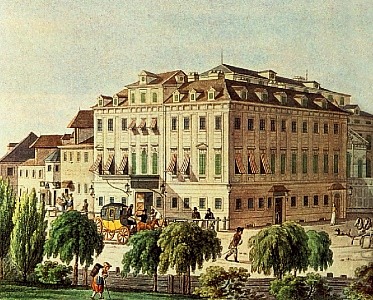
The concert took place at the Theater an der Wien in Vienna on the 22nd of December, 1808. It was freezing in the hall, and the orchestra had only rehearsed once. The concert, which lasted more than four hours, was conducted by Beethoven himself.
At the time, Beethoven was grappling with progressive deafness. Before he started writing the Fifth, he had confessed suicidal despair in the Heiligenstadt Testament of 1802, but he affirmed his commitment to the music: “I will seize fate by the throat.” This sentiment infuses the symphony, turning personal adversity into universal narrative. Written at the same time as Symphonies No. 4 and 6 (Pastoral), No. 5 is set apart by its raw power and resilience. Its mighty sound embodies hope amid chaos.
The Fifth Symphony pushes boundaries in form, orchestration, and expression. It is a dramatic, four-movement journey that moves from urgent conflict, “fate knocking at your door” to triumphant resolution. Each movement carries a distinct emotional tone, telling a story that runs deeper than any symphony before it.
Fun fact: The first movement of Beethoven’s Fifth is included on the Voyager Golden Record, a gold-plated copper phonograph disc containing 116 images, natural sounds, music from many cultures, and greetings in 55 languages. It was created in 1977 as a message to any extraterrestrial civilization that might encounter the spacecraft. This week, on November 18th, Voyager 1 will officially become the first human-made object to reach a distance of one light-day from Earth (the distance light travels in 24 hours, 16.1 billion miles).
What To Listen For:
- Movement I: Allegro con brio
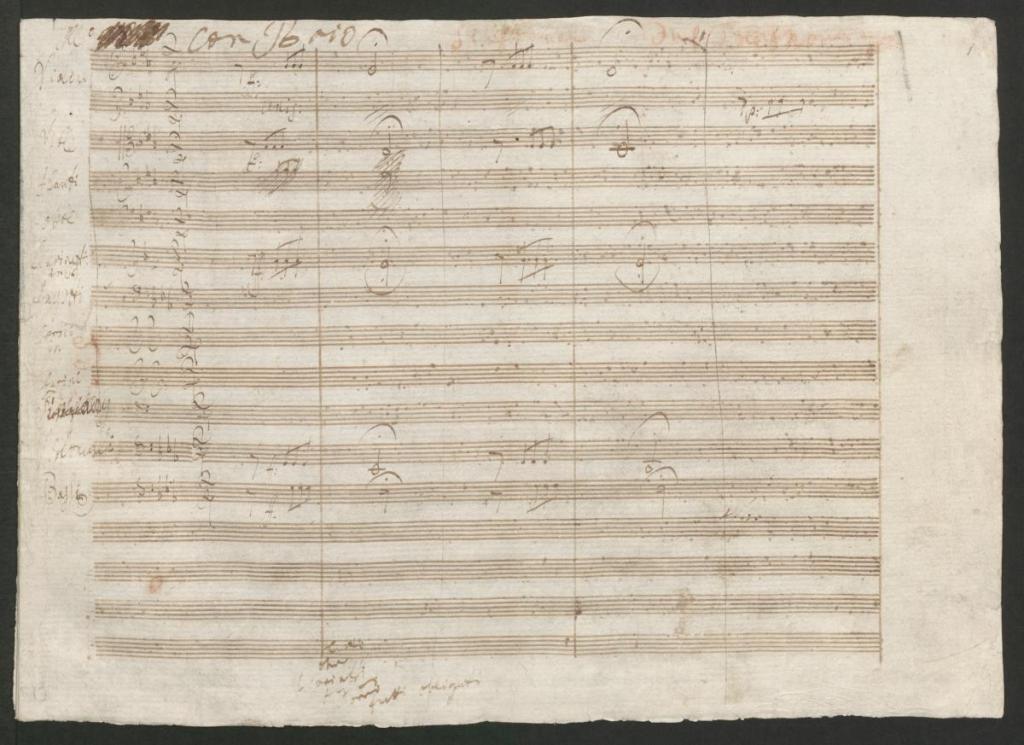
The symphony opens, of course, with the “Fate” motif in an ominous C minor. That motif dances around through different voices in the orchestra, redeployed in various ways in the development section. It is the shortest of all of Beethoven’s symphonic first movements. The mood is agitated, relentless, and conflict-driven, conveying the feeling of “fate knocking on the door.” The music alternates between bursts of urgency and moments of darker, more brooding expression, creating a sense of struggle against overwhelming forces.
- Movement II: Andante con moto
The second movement stands in stark contrast to the first: it is lyrical, melancholic, and contemplative. It has a flowing, song-like theme, written in double variation (meaning two themes presented and varied in alternation). If you have only ever heard the beginning of the first movement, such a sweet and vulnerable continuation may seem surprising. The con moto (with motion) tempo marking keeps the storyline moving forward, while the lyrical and introspective melody offers a breath of calm and reflection. It feels like the protagonist of the story is pausing to process the conflict introduced by the first movement.
- Movement III: Scherzo: Allegro
Movement III is written in ternary form with a scherzo and a trio, following Beethoven’s trend of using a scherzo instead of a traditional minuet as his third movement. The movement returns to the opening key of C minor in the cellos and double basses, followed by a responding contrasting theme from the winds. The overall character is lively and dance-like, the bouncy rhythm and lighter texture offering a playful and spirited contrast to the heaviness of the first movement. There is a mischievous joy behind the music, as if the struggle from before has lifted slightly and the music finds a moment of freedom and light-heartedness. It does not end with a pause before the fourth movement – it transitions directly into the fourth movement.
- Movement IV: Allegro
The fourth movement begins much louder, the orchestra joined by five new players: three trombones, contrabassoon, and piccolo. Now in C major, a shift that was rather unusual for Beethoven, the mood is exuberant and triumphant. It is fast, energetic, and celebratory, featuring the “Fate” motif transformed into one of victory. The music builds for an extremely long time, which is needed to ground the extreme intensity of this enormous symphony. The uplifting conclusion symbolizes overcoming fate and achieving resolution.
The symphonic story moves from conflict and struggle to reflection and tenderness, then from playful release to triumphant resolution. The “Fate” motif is woven throughout the symphony into one, cohesive narrative, symbolizing the transformation of hardship into strength.
A Comparison of Beethoven’s Fifth Symphony to Its Predecessors
Beethoven’s Symphony No. 5 marks a distinct break from the conventions of earlier Classical-era symphonies in both thematic conception and structural design.
- Thematic innovation: the “Fate” motif
Unlike previous symphonies where themes were often distinct and self-contained, Beethoven made the four-note “Fate” motif a central element of the entire symphony. Variations of the motif are infused into every movement, being developed, transformed, and interrupted by many voices in the orchestra. This approach creates a cohesive narrative arc, rather than a collection of separate movements. This technique became more typical in Romantic-era works.
- Dramatic contrast and emotional scope
The Fifth’s dramatic C minor opening and turbulent development contrast sharply with the lyrical second movement and the triumphant C major finale. The dramatic arc mirrors a personal struggle and resolution. The emotional range and the use of minor key intensity to express conflict was more expressive than the balanced, often serene contrasts of earlier works.
- Innovative form and structure
Before Beethoven, earlier symphonies (such as those by Haydn and Mozart) often treated each movement as its own independent entity. Beethoven instead wove thematic material across movements, linking the third movement directly to the finale and hinting at the C major resolution far in advance. This “through-composed” feel was unprecedented in the genre at the time. Removing the break between the two movements creates a faster, more urgent flow that directly links tension and resolution.
- Influence on later music
Unifying theme and form by using a single motif to drive an entire symphony set a precedent for motivic development and structural unity. This technique influenced Romantic composers like Brahms and Mahler. It redefined the symphony as a unified, programmatic whole rather than a set of independent movements, marking it as a turning point in the genre’s evolution.
Just like Beethoven’s original patrons for the premiere concert, you can experience the full symphonic journey of Beethoven’s Symphonies No. 5 & 6 with Pacific Symphony on February 4, 2027.
Don’t miss Symphonies No. 1 & 2 January 28, 2027, or Symphonies No. 3 & 4 on January 29, 2027. Read more about each symphony here:

Leave a Reply