
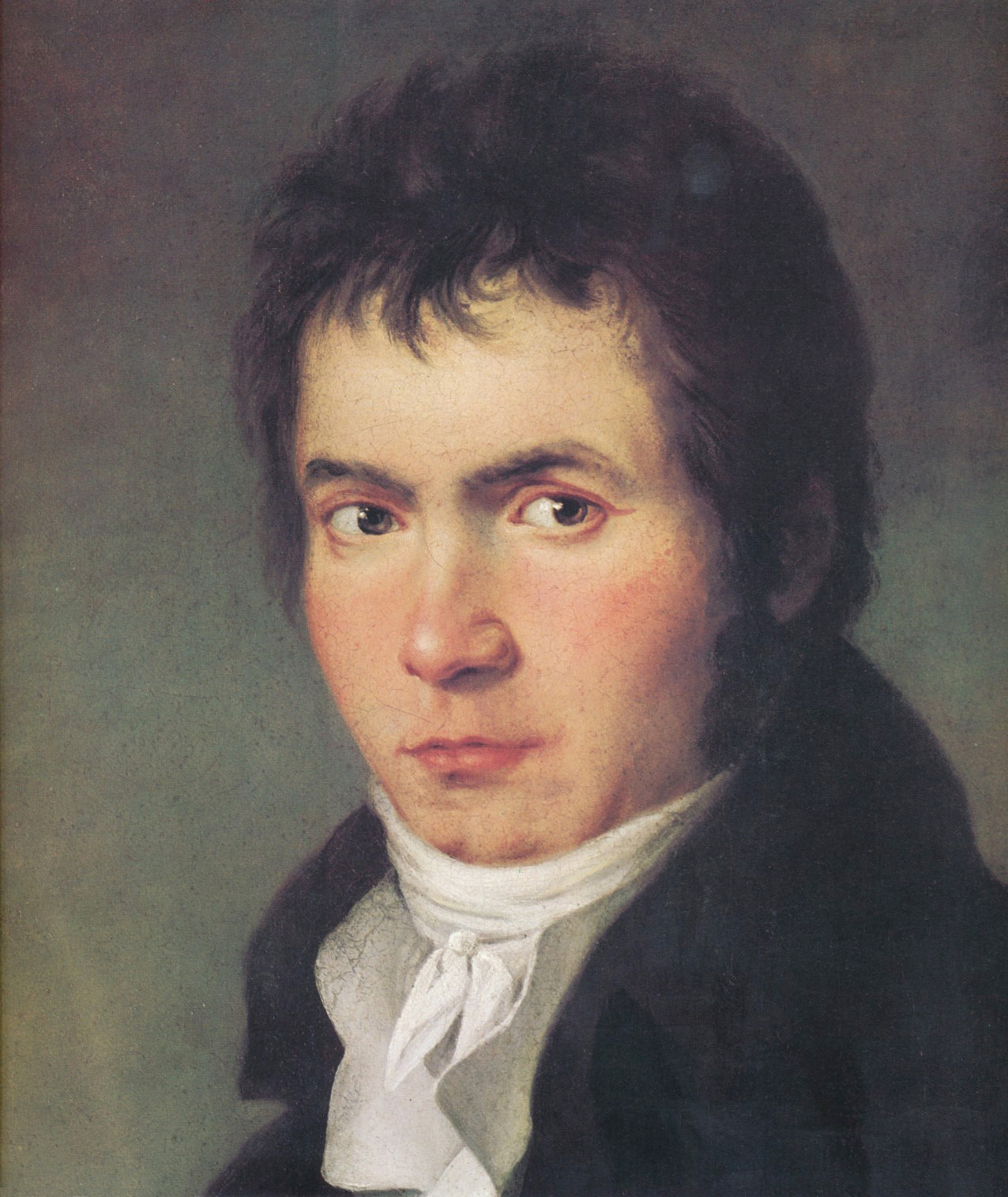
Beethoven’s Symphony No. 4 is often overshadowed by the monumental Third and Fifth Symphonies. It is expressive and contemplative, often complimented for how deeply beautiful its melodies are. It is one of Beethoven’s least-known and least-performed symphonies – don’t miss your chance on January 29, 2027 to hear Pacific Symphony perform Beethoven’s Third and Fourth Symphony under the direction of Alexander Shelley. This is a rare opportunity to appreciate the stark contrast in Beethoven’s symphonic explorations.

Fun fact: Robert Schumann, an Early-Romantic German composer, pianist, and music critic, referred to Beethoven’s Fourth Symphony as “a slender Greek maiden between two Norse giants,” referring to the titans of musical innovations known as Beethoven’s Third and Fifth Symphonies.
Symphony No. 4 was composed in 1806, commissioned by Count Franz von Oppersdorff during a summer visit with longtime patron Prince Karl Lichnowsky for a private orchestra performance of Beethoven’s Second Symphony. The Fourth Symphony was composed during the summer and fall of that same year, most of it believed to have already been complete before the commission was requested. Beethoven was already working on what would become his Fifth Symphony at the time. The Fourth Symphony premiered at a private concert in Vienna at Prince Lobkowitz’s townhouse in March 1807. The first public performance happened over a year later in April 1808, the same year as the premiere concert for the Fifth and the Sixth Symphonies. It becomes very clear – Beethoven was churning out these expansive works of art at an impossibly fast rate. This was a time of both personal independence and artistic experimentation, shaping the character of the Fourth Symphony.
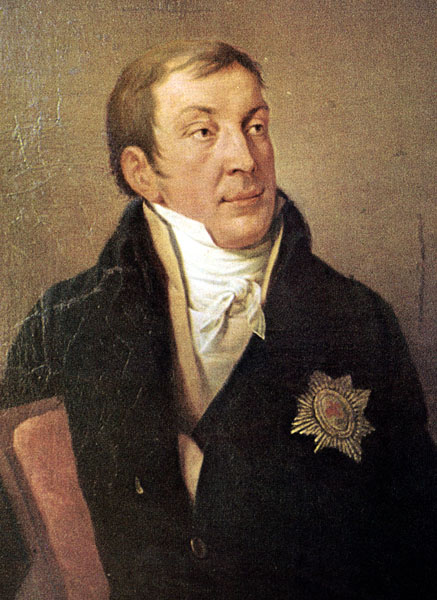
Fun fact: At the time when the Fourth was written, he was navigating the fallout of his relationship with Prince Lichnowsky – which allegedly came after Beethoven refused a request from Prince Lichnowsky to improvise on the piano for dinner guests. In an “apology” letter after the fact, Beethoven famously wrote “Prince, what you are you are through the accident of birth; What I am, I am through myself.”
Beethoven’s Symphony No. 4 represents a creative transition to a more lyrical style, while still engaging with the heroic ideals of his earlier symphonies. The score is lively, shining in its own ways rather than repeating the methods used in its bookend symphonies. Robert Schumann’s famous description, “a slender Greek maiden between Two Noise giants,” refers to its understated nature and selective economy of musical materials. Beethoven returns in many ways to the style of his Second Symphony. Some listeners see this as a regression to earlier styles, but critics like Schumann recognized the unique and thematically important position of the Fourth Symphony between the Third and the Fifth.
Musical Fact: an “economy of materials” refers to a compositional approach where a limited set of musical elements (notes, motifs, rhythms, etc.) is developed and transformed throughout a work, creating a self-contained, tightly structured musical language.
Beethoven’s Fourth Symphony is lighter than the massive Third and the dramatic Fifth, acting as a stylistic “breathing space” in Beethoven’s symphonic arc. The symphony is very accessible to new listeners, filled with pleasantly buoyant melodies and a genial tone. Symphony No. 4 acts as a bridge between the heroic and the personal statements Beethoven was making, showing off his range.
He was not limited to radical works as many stories would have you believe: the Fourth showed off his personal expression and charm while still containing subtle innovations like brisk rhythmic drive, inventive development, and harmonic surprises. This is a moment to find balance between the extremes – a moment of lightness and grace that still belongs to the revolutionary spirit of his time.
What to Listen For
- Movement I: Adagio – Allegro vivace
The first movement has a slow introduction, like the First and Second Symphonies. It hovers mysteriously in minor keys, featuring pizzicato and pianissimo by the strings, and suspended notes in the winds. A surprise fortissimo launches the orchestra into the allegro vivace, full of buoyant and rousing energy. The mood shifts from quiet contemplation to exuberant motion.
- Movement II: Adagio
The second movement is an expressive rondo with a tender, lyrical main theme. It has a more subtle melody, and it feels sweet and reminiscent. The warm, emotional interlude is interrupted by a more forceful repetition of the same intervals heard in the strings while winds, primarily the flute, drift through the main melody. The intensity builds through the use of timpani, low brass, and dynamic contrast, but the overall gentle nature offers a moment of calm and affectionate repose after the excitement of Movement I.
- Movement III: Scherzo-trio – Allegro vivace
Movement III is titled Menuetto in most printed scores, but the original manuscript marks the movement Allegro vivace. His original tempo marking is at least 100 beats per minute, which is far too fast for a traditional minuet. Much like the First Symphony, Beethoven broke out of the mold of the traditional minuet and employed a dance-like tune to produce a Scherzo. It is playful and bouncy, with an innovative five-part rather than three-part structure. The movement has a lilting wind-and-string texture that feels airy and gentle. The contrast between the cheerful, galloping rhythm and the smooth, flowing trio paints a picture of a whimsical, almost comic character, like a lighthearted social dance.
- Movement IV: Allegro ma non troppo
The fourth movement is Allegro ma non troppo – an afterthought from Beethoven meaning brisk, but not too much so. It is in a playful style that Beethoven referred to as “aufgeknöpft” or “unbuttoned.” It uses perpetuum mobile, which is defined as part or most of a piece intended to be repeated without the “motion” of the melody being halted when a repeat begins. It is uplifting and spirited, with a driving rhythm and clear, melodic themes that keep the music moving forward. The mood is joyful and confident, yet not heavy or dramatic, more like a celebratory run than a heroic march. The movement closes with a stirring but light conclusion, offering a sense of graceful completion.
The Fourth Symphony’s emotional arc moves from mystery to joy, to tenderness and playfulness, and finally to radiant energy.
How Symphony No. 4 Compares to Symphony No. 3
Symphony No. 3 (“Eroica”) is a monumental, heroic, and revolutionary work that broke Classical norms, while Symphony No. 4 is a lighter, more lyrical, Haydnesque piece that stands in gentle contrast to Eroica.
- Musical Character
- The Eroica is heroic, dramatic, and expansive. The first movement opens with a bold tutti in E♭ major and develops a sonata form with intense contrasts. The second movement is a slow, somber funeral march in C minor, a rarity in symphonic tradition. Its length and emotional range were unprecedented for its time
- The Fourth is lighter, more melodic, and balanced. It features graceful themes, gentle humor, and a more serene character. It avoids the emotional drama of the Eroica, presenting a more Haydn-like elegance.
- Structural and emotional differences
- Scale and ambition: No. 3 is a large-scale programmatic and emotionally demanding work; No. 4 is more compact and restrained.
- Emotional range: No. 3 spans heroic triumph, mourning, and exuberance; No. 4 stays within a gentler, more optimistic emotional spectrum
- Influence: No. 3 is a landmark in symphonic form and Romantic expression; No. 4 is less often performed but valued for its charm and lyrical beauty.
- In short, the Eroica is a bold, revolutionary statement of Beethoven’s new artistic vision, while the Fourth is a refined, graceful work that contrasts with its heroic predecessor.
Witness the next step of the revolution live with Pacific Symphony and Alexander Shelley in the Renée and Henry Segerstrom Concert Hall in Costa Mesa, California on January 29, 2027. This second concert of the Beethoven Revolution Festival will feature Beethoven’s Symphony No. 3 and Symphony No. 4.
Don’t miss Symphony No. 1 and No. 2 live on January 28, 2027. Get tickets and read more about each symphony here:

Leave a Reply