

Ludwig van Beethoven had an impressive range of musical genres under his belt in his early twenties: piano trios, string trios, works for wind instruments, duo and solo piano sonatas, and a piano concerto. Despite admiring the work of Haydn and Mozart and knowing hundreds of symphonies as a violist in Bonn, Beethoven himself had never written a symphony.
Beethoven’s Symphony No. 1 was published in 1801 as his Opus 21, though it is not clear when he started or finished it, since sketches of the finale were found to be from 1795. As a student of Joseph Haydn and an admirer of Wolfgang Amadeus Mozart, Beethoven incorporated their sound into his earlier works. Haydn, considered to be “The Father of the Symphony”, transformed the art of writing a symphony through structure, thematic development, and orchestration. Mozart’s symphonies provided a model of melodic charm, lyrical clarity, and balanced phrasing for Beethoven’s early compositions. Beethoven absorbed the soulful aspect of Mozart’s style and the skeleton and structure of Haydn’s symphonies, then fused them with his own dramatic intensity and emotional depth. This work marked both Beethoven’s first major public symphonic statement and is both a tribute to his predecessors and a sign of his own emerging style.
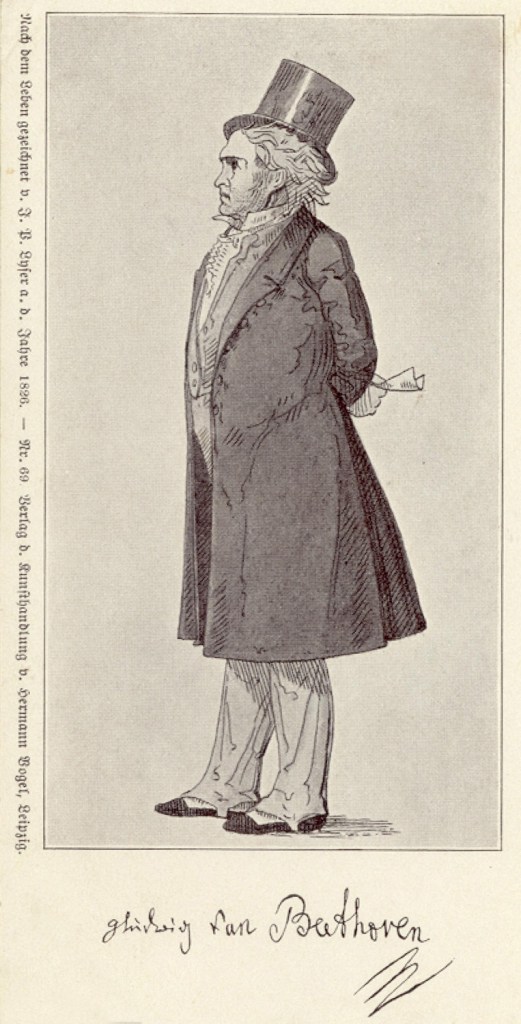
The First Symphony was originally intended to be dedicated to Elector Maximilian Franz, Beethoven’s second employer, but he passed away, and the dedication subsequently went to Baron van Swieten, another one of Beethoven’s patrons. The premiere of the First Symphony took place in April of 1800, very effectively asserting Beethoven’s artistic identity in the musical landscape of Europe at the time. Historic records of the performance and its enthusiastic reviews describe the premiere as “the most interesting concert in a very long time” and praise Beethoven’s innovative approach to the traditional classical style.
The First Symphony is light-hearted and entertaining while still sticking to the conservative style of Haydn. There are hints of the musical revolution in Beethoven’s near future, heard in the loud dynamic choices, surprising harmonies, and generous writing for winds (heavily influenced by Mozart’s masterful use of wind instruments). It was a bold yet controlled statement, blending homage to its predecessors with fresh expressive ideas.
What To Listen For:
- Movement I – Adagio molto – Allegro con brio
- The first movement is in sonata form and features a harmonically surprising introduction. The mood feels contemplative as the orchestra seems to test out different chords before landing on the right key (C major). After a gentle start, an energetic and quiet lighthearted theme leaps out, then abruptly shifts into the second subject of the piece (a Mozart-esque trait). There is a darker moment with a lyrical oboe solo, and the drama grows throughout the movement leading to a return to the original material in a more brilliant way than was typical for the Classical style.
- Movement II – Andante cantabile con moto
- Movement II (F major) is a slow movement in sonata form, with a shy theme that is treated like a fugue. Like the first movement, there is little time for transition to the second subject. The staccato articulation mixed with smooth chords makes the music feel bouncy, light, and danceable. The tempo marking, con moto (with motion), gives this section a playful feeling. Two more themes follow the second, and a subtle, heartbeat-like undercurrent from the timpani adds a touch of urgency to the otherwise serene mood.
- Movement III – Menuetto: Allegro molto e vivace
- This movement is a lively, triple-meter dance in C major, full of sparkle and precision. The opening Menuetto features a festive, courtly mood with crisp rhythms and buoyant character. The Trio section offers a lighter, more intimate contrast with a gentle, pastoral interlude before the Menuetto returns with renewed energy. The joyful gait of this movement foreshadows Beethoven’s later, more vigorous scherzos.
- Movement IV – Adagio: Allegro molto e vivace
- The fourth movement starts with a Haydn-esque joke: the violins open with scale fragments played slowly by the first violins alone, gradually adding more notes and creating an unusual and unsure effect before blossoming into the full scale-like melody. The Adagio is tender and expressive, providing a layer of emotional depth and a moment of repose. It is followed by the Allegro molto e vivace in sonata form – a spirited, exuberant conclusion with strong thematic contrasts, driving rhythms, and a sense of triumphant resolution. The combination of the slow and fast sections creates a journey from introspection to exuberance, ending the symphony on a high, uplifting note.
These emotional arcs reflect Beethoven’s ability to balance Classical form with personal expression, making each movement a distinct yet connected part of the symphony’s narrative.
Witness the beginning of the revolution live with Pacific Symphony and Alexander Shelley in the Renée and Henry Segerstrom Concert Hall in Costa Mesa, California on January 28, 2027. This first concert of the Beethoven Revolution Festival will feature Beethoven’s Overture to Coriolan, Symphony No. 1, and Symphony No. 2. Read more about Symphony No. 2 here.
Immerse yourself in the next seven symphonies and other special events in the Beethoven Revolution Festival! Explore here.

Leave a Reply