

Conductor Ruth Reinhardt will lead Pacific Symphony in three beloved classical works on December 3-5, 2026. In addition to Edvard Grieg’s Piano Concerto, which you can read about here, the program includes Prelude No. 1 from Detlev Glanert’s Three American Preludes and Antonín Dvořák’s Symphony No. 6.
In celebration of America’s 250th birthday, Pacific Symphony and Artistic & Music Director Alexander Shelley have been exploring America’s musical threads, from great American composers to composers who chose to call America their home. In this Classical Series concert, we look at two composers (Dvořák and Glanert) who have contributed to American musical history by drawing on American musical influences to compose something entirely unique. This type of cross-cultural exchange remains a key example of how the symphonic tradition can be reshaped by new voices in universally resonant ways.
Detlev Glanert’s Three American Preludes – Prelude No. 1
Detlev Glanert (b. 1960) is one of the most-performed living composers in Germany today. He has written dozens of works for orchestra and other ensembles; his operas are particularly well known. His musical style blends tradition and modernity in an audience-friendly way, defined by lyrical expressivity and a strong affinity with the Romantic tradition.

Three American Preludes was written in 2014 and premiered under Ruth Reinhardt’s direction with the Tanglewood Music Center Orchestra in Lenox, MA in 2015. The work is in response to three requests that Glanert received from the United States for short, orchestral pieces that eventually turned into a small cycle. The movements are independent works, though the basic material intertwines in a way that makes it seem like a short, three-movement symphony. The styles shift from classic American “fanfare” sounds to waltz, jazz, art songs, and other hints of older European styles.
Listen for harmonic and rhythmic language that blends modernist techniques with a sense of spaciousness and folk-like motifs, reminiscent of Aaron Copland’s Appalachian Spring. There are also programmatic and thematic elements that echo the collage-like style of Charles Ives, and Leonard Bernstein’s integration of American cultural imagery into orchestral writing. Glanert’s deliberate musical references to these iconic American voices are carefully crafted in his own unique style.
The core material is American-inspired, but the result is a dialogue between American and European traditions, telling the story of the broader American musical identity that has long absorbed and reimagined European influences.
Prelude No. 1 starts with a lively fanfare of overlapping staccato trumpet voices, descending into a lyrical string section that presses forward to rebuild the tension. The mood is tense and slightly unsettling, full of rhythmic pulses that keep you on the edge of your seat. The cacophony suddenly disappears and pizzicato pulses from the strings take over. The texture quickly builds up again: longer brooding tones in the brass, frantic swells in the violins, a few bars of woodblock strikes that add a sense of urgency, before the orchestra falls into a waltz-like melody. The piece is constantly surprising, drawing from the American traditional spirit and blending it with European elegance.
Dvořák’s Symphony No. 6
Antonín Dvořák (1841-1904) was a Czech composer who has been described as “arguably the most versatile” composer of his time. In 1892, he came to America to be the director of the National Conservatory of Music of America in New York City, established by Jeannette M. Thurber (New York society leader and arts patron). The New York Times ranked Dvořák next to Brahms and Tchaikovsky – his talents were well-received, and he wrote his two most successful orchestral works while in the United States (the New World Symphony and his Cello Concerto).
Dvořák had a mission in America: he came to “discover what young Americans had in them and help them express it.” His goal was to discover what the New World had to offer to the world of musical composition. Dvořák frequently drew from rhythms and motifs in the folk music of Moravia and his native Bohemia. He continued this practice in the United States, embracing African American spirituals and Native American melodies to create a uniquely American sound. He challenged American composers to go after the “folk songs of America” for inspiration, arguing that in the melodies found in African American spirituals, Dvořák discovered “all that is needed for a great and noble school of music.” His musical philosophies legitimized folk-based composition in the classical tradition, helping to establish a lasting cultural and artistic bridge between European and American musical traditions.
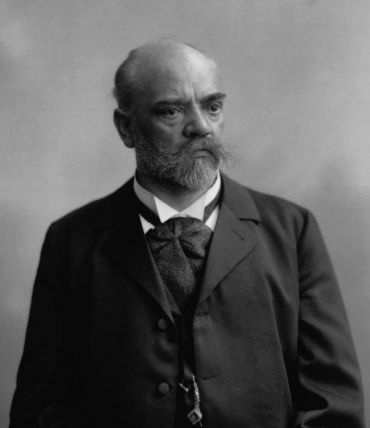
Dvořák’s most notable contribution to American music was perhaps the simple demonstration that by drawing on their own cultural roots, American composers could create great works and join the ranks of internationally renowned composers. His goal was to discover and cultivate an authentic American musical voice, and his impact was to expand the scope of American classical music, inspire future composers, and embed folk traditions into the canon of Western art music.
Symphony No. 6 was originally known as Symphony No. 1, since it was the first of his symphonies to be published. The first four symphonies he composed were lost and eventually rediscovered and published after his death. Scholars shifted the original numbering to include his first four symphonies based on the order of composition, rather than publishing, pushing the original No. 1 to shift to No. 6.
The Sixth Symphony was composed in 1880 and premiered in 1881 (11 years before Dvořák visited the United States). It is majestic yet pastoral, evoking images of the sunny Bohemian countryside. The orchestration is rich, with vivid woodwinds, brass, and strings in the standard four-movement symphonic structure. This symphony marries Czech folk vitality with the grandeur of Germanic Romanticism.
The work is both intimate and grand. Listen for warm flowing melodies and exuberant rhythms.
Read more about what to listen for:
- Movement I: Allegro non tanto
- The first movement opens with a gentle, sunlit pastoral mood. The first theme is lyrical, like a slow river, followed by a tender second theme that is rich in woodwind and string color. The energy builds in the next section with vigorous horn and string outbursts. The first movement finishes with a majestic restatement of the main theme. The overall mood is peaceful beauty that gives way to confident, uplifting grandeur.
- Movement II: Adagio
- The second movement is much slower, a sweet nocturne with a delicate woodwind introduction. The main theme features a duet between the winds and the strings. The movement is lyrical and introspective. Listen for the pensive flute cadenza and the response from the horn.
- Movement III: Scherzo: Furiant – Presto
- The third movement is lively and full of syncopated rhythms that create a playful, infectious energy. There is a calm Trio section featuring the woodwinds and piccolo, followed by a surge back into the spirited Scherzo. The feeling of this movement is joyful, spirited, and folk-like.
- Movement IX: Allegro con spirito
- The finale begins with a light, scampering string theme before expanding into a spirited fugato and a jaunty, dance-like tune. The following development section is colorful and exciting. The closing section features a brass chorale that resolves the symphony’s themes. The overall mood is playful at first, building to a jubilant, triumphant conclusion.
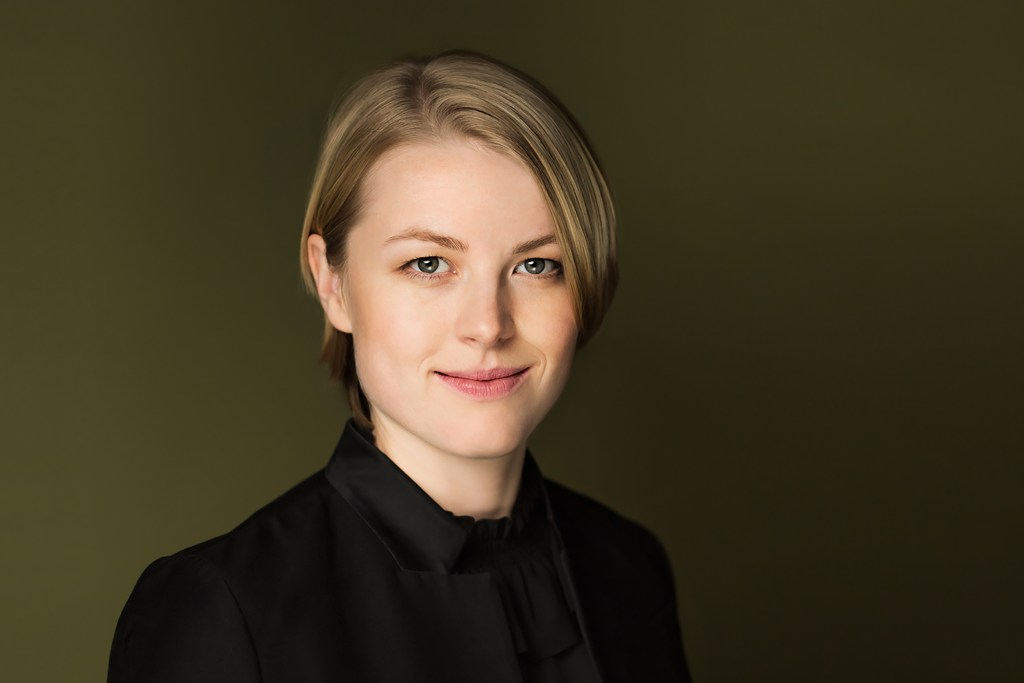
Listen to these pieces live and see Ruth Reinhardt in her Pacific Symphony debut December 3-5, 2026 in Renée and Henry Segerstrom Concert Hall in Costa Mesa, California. This concert is a wonderful way to kick off the joyful holiday season. Get tickets here.

Leave a Reply