

The Secret Behind Rachmaninoff’s Symphony No. 2
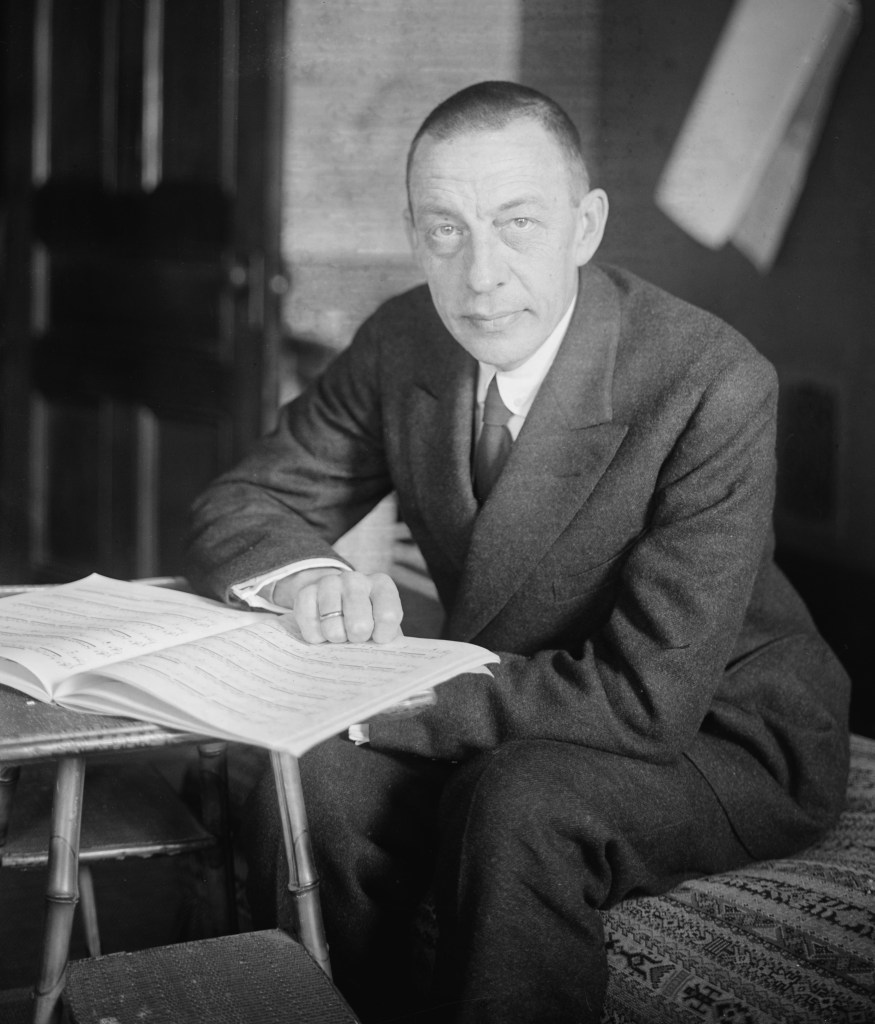
The creation of Sergei Rachmaninoff’s Symphony No. 2 is a fascinating and convoluted story of psychological recovery, creative secrecy, political upheaval, and ultimate vindication by an artist still haunted by an early-career failure.
“To hell with them! I do not know how to write symphonies, and besides, I have no real desire to write them.” Rachmaninoff made that remark in a letter to his friend Nikita Morozov in February 1907, while he was struggling to complete his Symphony No. 2. Perhaps he was still smarting from the initial failure of his Symphony No. 1, which premiered in 1897 to disastrous reviews and plunged the composer, then only 24, into a deep depression. Though his reputation was redeemed by the smashing success of his Piano Concerto No. 2 in 1901, clearly Rachmaninoff still suffered from intense periods of doubt about his abilities.
In the fall of 1906, Rachmaninoff began a first draft of the work, which he kept a secret. It was a difficult time for him. The constant demands of performing and the escalating political unrest, including the “Bloody Sunday” massacre, which sparked Russia’s 1905 revolution, made it impossible to focus on large-scale composition. He moved his family to Dresden, Germany, seeking seclusion.
Rachmaninoff remained secretive about his new project, undoubtedly still spooked by the struggles surrounding his first attempt at a symphony. Unfortunately, his friend, pianist Alexander Siloti, let the news slip that the work was nearly finished and Rachmaninoff would soon conduct the new symphony’s premiere. That public revelation infuriated Rachmaninoff. “While I was planning to put it in ‘clean’ form, it became terribly boring and repulsive to me,” he wrote in a letter. “So I threw it aside and took up something else.”
Maybe the setback was a blessing in disguise. Rachmaninoff restarted the work in the summer of 1907, and its first performances in St. Petersburg and Moscow early the next year were a rousing success. Critics and audiences immediately embraced the work. The rest of the classical music world soon followed suit.
The symphony is dedicated to his teacher, Sergei Taneyev. It is famous for its lush, expansive melodies—particularly the clarinet solo in the third movement—and its “motto” theme that connects all four movements. For decades, it was common for conductors to perform heavily cut versions due to its hour-long length, but today it is almost always performed in its complete, original form.
The symphony begins with a somber, brooding Largo introduction where cellos and basses establish a seven-note “motto” theme. This “motto” serves as the structural foundation for the entire symphony. The movement then transitions into a restless Allegro moderato in sonata form with lush, long-lined melodies and intense dramatic climaxes, embodying a quintessentially Russian sense of melancholy.
The second movement, a Scherzo, is vibrant and energetic, famously opening with a swashbuckling horn call. The movement references the Dies Irae (Day of Wrath) plainchant in the opening bars. A central Trio section features a complex, driving fugue, showcasing Rachmaninoff’s mastery of counterpoint. It ends with a hushed, ghostly coda as the energy gradually dissolves.
The third-movement Adagio is the emotional heart of the symphony. It features two major themes—a soaring violin melody and a lengthy, soul-searching solo for the clarinet. As the movement progresses, it seamlessly interweaves these new ideas with the “motto” theme from the symphony’s first movement, creating a sense of organic unity.
The fast-paced finale is a boisterous and triumphant celebration that shifts the symphony from E minor to a glorious E major. It opens with a tarantella-like energy and includes festive marches. Rachmaninoff masterfully weaves in recollections of themes from all three previous movements, effectively summing up the journey. The work closes with a whirlwind coda and Rachmaninoff’s trademark decisive four-note rhythmic ending.
See Pacific Symphony perform Rachmaninoff’s Symphony No. 2 June 11-13, 2026 at 8pm or at 3pm on June 14, 2026.
Facts:
- The lyrical theme of the third movement was the basis for Eric Carmen’s 1976 hit song, “Never Gonna Fall in Love Again.” The sweeping second theme of the second movement was prominently featured in the 2014 film “Birdman,” which won the Academy Award for Best Picture.
- Rachmaninoff subtly wove the Dies irae (a medieval chant about the Day of Judgment) into the second movement. He was famously obsessed with this melody and used it in almost every major work he wrote.
- In the final movement, the development section features a passage where different instruments play overlapping descending scales. This was designed to mimic the chaotic, resonant sound of all the church bells of Moscow ringing at once.
- For decades, the symphony was rarely performed in full. It was often chopped down from 60 minutes to just 35–45 minutes. These became known as the “Philadelphia Cuts” because they were popularized by conductor Eugene Ormandy and the Philadelphia Orchestra.
- Surprisingly, Rachmaninoff himself eventually authorized these massive cuts for other conductors to use, though he always performed it in full when he was on the podium.
- The work won the Glinka Prize in 1908. This came with a 1,000-ruble award—a significant sum that finally provided Rachmaninoff with financial stability alongside his renewed confidence.