

Ludwig van Beethoven (1770-1827) is one of the most recognizable names in classical music. His famous melodies can be heard all around the world: in the concert hall, the movie theater, television, commercials, classrooms, and even elevators. Beyond the enduring appeal of his music lies a complex man who was both a profound musical genius and an intricately nuanced revolutionary.
Born in Bonn, Germany, Beethoven moved to Vienna as a young musician and quickly established himself as one of the city’s most remarkable pianists and composers. Though remembered today as a towering figure of classical music, those who knew him described a man of striking contradictions: charismatic yet stubborn, warm-hearted yet quick-tempered, disciplined in his work but often careless in his appearance.
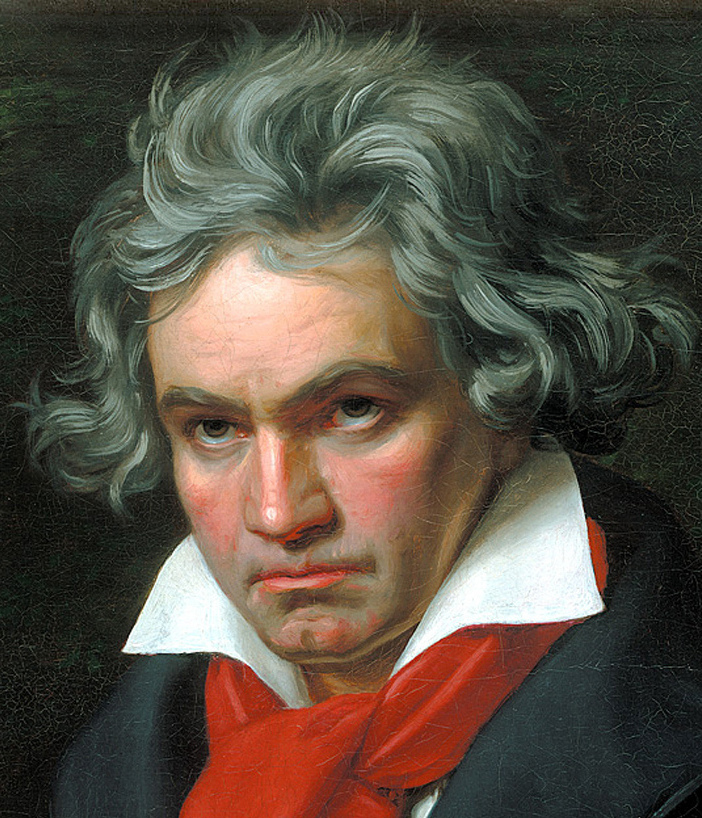
Beethoven stood less than five and a half feet tall, with a strong build, unruly dark hair, and intense eyes that many contemporaries found unforgettable. As his hearing began to deteriorate in his late twenties, his world gradually grew quieter, increasing his isolation while deepening one of history’s most extraordinary creative journeys.
He lived during one of the most turbulent periods in European history. He came of age during the Enlightenment, when ideas about liberty, reason, and individual rights challenged long-standing traditions. As an adult in Vienna, he witnessed the shockwaves of the French Revolution, the rise and fall of Napoleon, and decades of political upheaval across Europe. These events transformed society and inspired artists to think on a larger scale about human freedom, heroism, struggle, and hope.
Beethoven’s nine symphonies reflect both his changing world and his own artistic evolution. His First and Second Symphonies build on the elegance and balance of the Classical style established by Haydn and Mozart. The Third Symphony, “Eroica”, expanded the scope and ambition of the symphony, opening the door to a more personal and dramatic musical language. The Fifth Symphony transformed a simple four-note motif into a journey of conflict and triumph, while the Sixth (“Pastoral”) expressed a deep connection to nature. In his final symphonies, Beethoven pushed the art form even further, culminating in the Ninth symphony, which famously introduced chorus and solo singers into a symphony in a celebration of human unity and brotherhood.
Across all nine works, Beethoven transformed the symphony from courtly entertainment into a powerful vehicle for human expression, creating music that continues to speak to audiences more than two centuries later.
The Myth of the Mad Genius
The story of who Beethoven really was is often shrouded by myths intertwined with the real challenges he lived through. Beethoven was responsible for a revolutionary force in European classical music at the time of his arrival in Vienna. It was during this period that he created the First and Second Symphonies. These symphonies laid a new groundwork for what was possible within the structure of symphonic music. Even in these early works, audiences could sense something different. It was as though Beethoven were testing how far he could stretch the conventions of his time without breaking them.
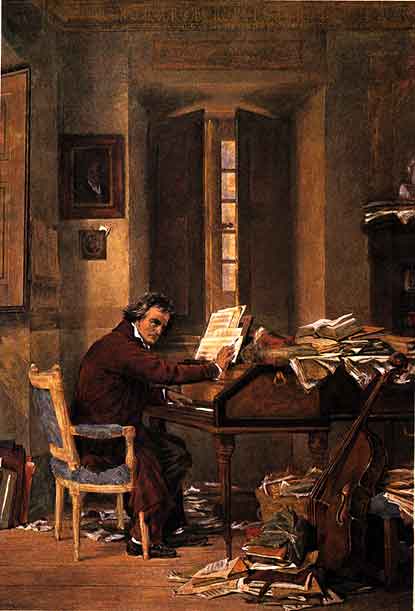
Beethoven came to fit an archetype of Romantic culture centered on the idea of an inspired genius who stands outside society, misunderstood yet destined for immortality. He is often portrayed as a mad genius tormented into brilliance by instability and suffering.
Underneath that appearance, he was a disciplined craftsman whose unyielding dedication to his craft drove his innovation in musical expression. This devotion debunks the myth that Beethoven was just a mad genius struck by spontaneous inspiration by showcasing the reality of relentless experimentation and learning.
The era in which he composed his Third Symphony, “Eroica,” known as the “Heroic period,” solidified an image of Beethoven as a wild musical spirit with an irrational temper and an unkempt appearance. The “Eroica” shocked listeners with its scale and ambition. What had once been an elegant entertainment became something larger: a musical journey filled with struggle and startling emotional weight.
Beethoven the Revolutionary
Beethoven lived at a time when the world was on the brink of artistic and intellectual revolution. The flourishing ideals of the Enlightenment encouraged questions about structure and form of society, and Beethoven participated in his own way. He represents the transition from the Classical to Romantic eras, fundamentally changing the landscape of Western music by expanding the scale, scope, and emotional depth of symphonies, string quartets, and sonatas.

Beethoven was deeply influenced by the ideals of the Enlightenment, the French Revolution, and the writings of Kant and Schiller. Embracing concepts of liberty, equality, and human dignity, his compositions were imbued with democratic messages that celebrated freedom and resistance against tyranny. He is an embodiment of artistic and personal struggle against adversity.
A Voice That Would Not Be Silenced
Perhaps one of the most compelling challenges in his life is his battle with hearing loss. For a man who viewed his life through creating new worlds with sound itself, this was cruel misfortune. He struggled with depression and irritability and became increasingly isolated as his hearing loss progressed. But he never lost touch with reality, and he maintained his ability to manage finances, revise music, and complete monumental works.
The Heiligenstadt Testament of 1802 is a letter that Beethoven wrote to his brothers. It reveals his near-suicidal thoughts, his genuine despair over losing the ability to hear his own art, and ultimately his resolve to overcome his condition through his art itself. The letter was coherent, emotionally articulate, and deeply perceptive – far from a display of “madness.”

His story is one of unyielding human spirit – he produced some of his most iconic pieces during his deafness – the late String Quartets, the 9th Symphony, imbued with spiritual yearning and deep introspection. Some of his most ambitious works emerged during the years when he could no longer experience sound as others did, making their scope and richness all the more remarkable. He was resilient, working through his personal devastation to communicate profound universality. His music gave artistic expression to social upheaval, human struggle, and the fight for freedom.
Why Beethoven Still Moves Us
Despite his music being known and celebrated across the world for more than 200 years, its real significance often goes unsaid. Centuries after his death, his music continues to resonate because it speaks to experiences that remain deeply human: struggle, perseverance, joy, hope, and the search for meaning. His symphonies move effortlessly between movements of intimate reflection and overwhelming grandeur, inviting listeners to confront life’s challenges and celebrate its possibilities.
What makes Beethoven remarkable is his transformation of what music could express. He expanded the symphony from a form of entertainment into a vehicle for profound emotional and philosophical ideas. In doing so, he created works that continue to inspire audiences across cultures and generations.
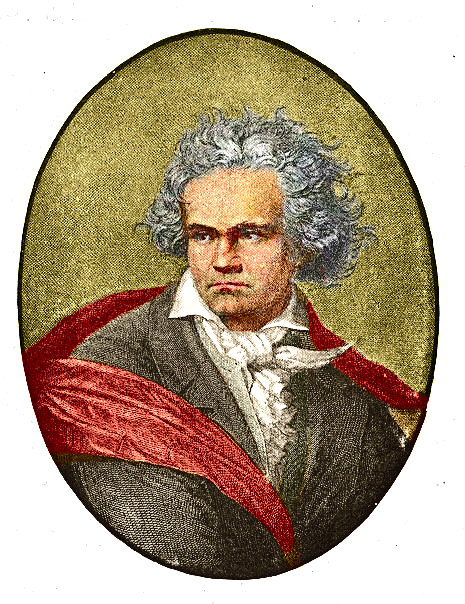
Experiencing Beethoven’s nine symphonies is more than a journey through music history. It is a journey through one of humanity’s most enduring artistic voices.
As Pacific Symphony’s Beethoven Festival unfolds, we invite you to discover each symphony’s unique story through our upcoming blog series exploring all nine symphonies in depth. Whether you’re hearing these masterpieces for the first time, or returning to them with fresh ears, each work offers something new to uncover.
Explore the Beethoven Symphony Blog Series
- Symphony No. 1: Coming Soon
- Symphony No. 2: Coming Soon
- Symphony No. 3, “Eroica”: Coming Soon
- Symphony No. 4: Coming Soon
- Symphony No. 5: Coming Soon
- Symphony No. 6, “Pastoral”: Coming Soon
- Symphony No. 7: Coming Soon
- Symphony No. 8: Coming Soon
- Symphony No. 9: Coming Soon, “Choral”
Experience Beethoven Live
There is no substitute for hearing Beethoven’s music performed live. Join Artistic & Music Director Alexander Shelley and Pacific Symphony for the Beethoven Revolution Festival and experience the complete cycle of Beethoven’s symphonies, January 28 – February 9, 2027 at the Renée and Henry Segerstrom Concert Hall in Costa Mesa, CA.
View Beethoven Revolution Festival Concerts and Purchase Tickets »
Leave a Reply