
The premiere of George Gershwin’s “Rhapsody in Blue” at New York’s Aeolian Hall on February 12, 1924, was a musical earthquake that captivated the audience from the moment of its thrilling opening, a swooping clarinet line that signalled a new talent had burst onto the scene.
Walter Damrosch, conductor of the New York Symphony Society, famously told Gershwin that he had “made a lady out of jazz” with his orchestral works, and he commissioned Gershwin to write a full-scale piano concerto.
The stakes couldn’t have been higher for the 25-year-old composer. While “Rhapsody in Blue” had made him a star, some critics pointed out that the triumph didn’t belong entirely to the composer – it was orchestrated by bandleader Ferde Grofé, not Gershwin himself. Determined to be taken seriously by the classical music establishment, Gershwin insisted on doing his own orchestration for this new project, purchasing several textbooks and studying the craft intensely while working on the score.
Gershwin began sketching ideas in May 1925, but his busy schedule on Broadway, which included working on the musicals “Tip-Toes” and “Song of the Flame,” delayed his progress. Desperate for some focus, he spent much of that summer at the Chautauqua Institution in upstate New York. Working in a small practice shack that was declared off-limits to visitors until 4:00 p.m. daily, he completed the three movements:
- The first movement, written in July, featured a driving Charleston rhythm.
- The second movement, composed in August, had a nocturnal and bluesy atmosphere.
- The third movement, finished in September, was described by Gershwin as an “orgy of rhythms.”
In November 1925, Gershwin hired a 55-piece orchestra at his own expense to run through his first draft at the Globe Theatre. This allowed him to hear his orchestration for the first time and make necessary revisions before the official debut.
The Concerto in F premiered at Carnegie Hall on December 3, 1925, with Gershwin at the piano and Damrosch conducting. Unlike the immediate, unanimous acclaim for Rhapsody, the concerto received mixed reviews. Some critics found it less original, while others, including Sergei Rachmaninoff, praised the work. Over time, it has come to be recognized as Gershwin’s most sophisticated symphonic achievement, successfully fusing American jazz and popular dance with the grandeur of the European concerto tradition.
Damrosch couldn’t resist extending his “lady” metaphor in his gushing praise for the Concerto in F:
“For all her travels and her sweeping popularity, (jazz) has encountered no knight who could lift her to a level that would enable her to be received as a respectable member of musical circles. George Gershwin seems to have accomplished this miracle. He has done it boldly by dressing this extremely independent and up-to-date young lady in the classic garb of a concerto. Yet he has not detracted one whit from her fascinating personality. He is the Prince who has taken Cinderella by the hand and openly proclaimed her a princess to the astonished world.”
Legendary violinist Jascha Heifetz was so impressed by Gershwin’s piano concerto that he famously hinted he’d love a violin concerto from him. Sadly, Gershwin’s untimely death prevented that collaboration. To compensate for the missing concerto, Heifetz took the initiative to create his own arrangements of Gershwin’s music, transcriptions of “Porgy and Bess,” the Three Preludes, and “An American in Paris.”
Interesting Facts:
- Gershwin originally titled the work the “New York Concerto” in his early drafts. He changed the name to the more traditional Concerto in F just days before its world premiere.
- Gershwin intended the first movement to represent the “young, enthusiastic spirit of American life,” which is why it features the Charleston rhythm, a popular dance beat of the era.
- Despite its jazziness, the work was heavily influenced by Anton Rubinstein’s Fourth Piano Concerto. Scholars have noted structural similarities that suggest Gershwin closely studied Rubinstein’s score for inspiration.
- In the second movement (the Andante con moto), Gershwin instructs the string section to strum their instruments in a style that mimics the sound of a banjo.
- While critics were initially divided on whether the work was “jazz” or “classical,” it received a positive critique from one of the undisputed classical music giants of the day, Sergei Rachmaninoff, who was present at the premiere.
- The original score was surprisingly sparse on tempo and expressive markings compared to Gershwin’s later works. Many of the instructions found in modern editions were added posthumously in 1942 by editor Frank Campbell-Watson.
See Alexander Shelley conduct Gershwin’s Piano Concerto in F as part of Shelley Conducts America at 250 May 28-30, 2026. Get tickets.
Pictured in this blog:
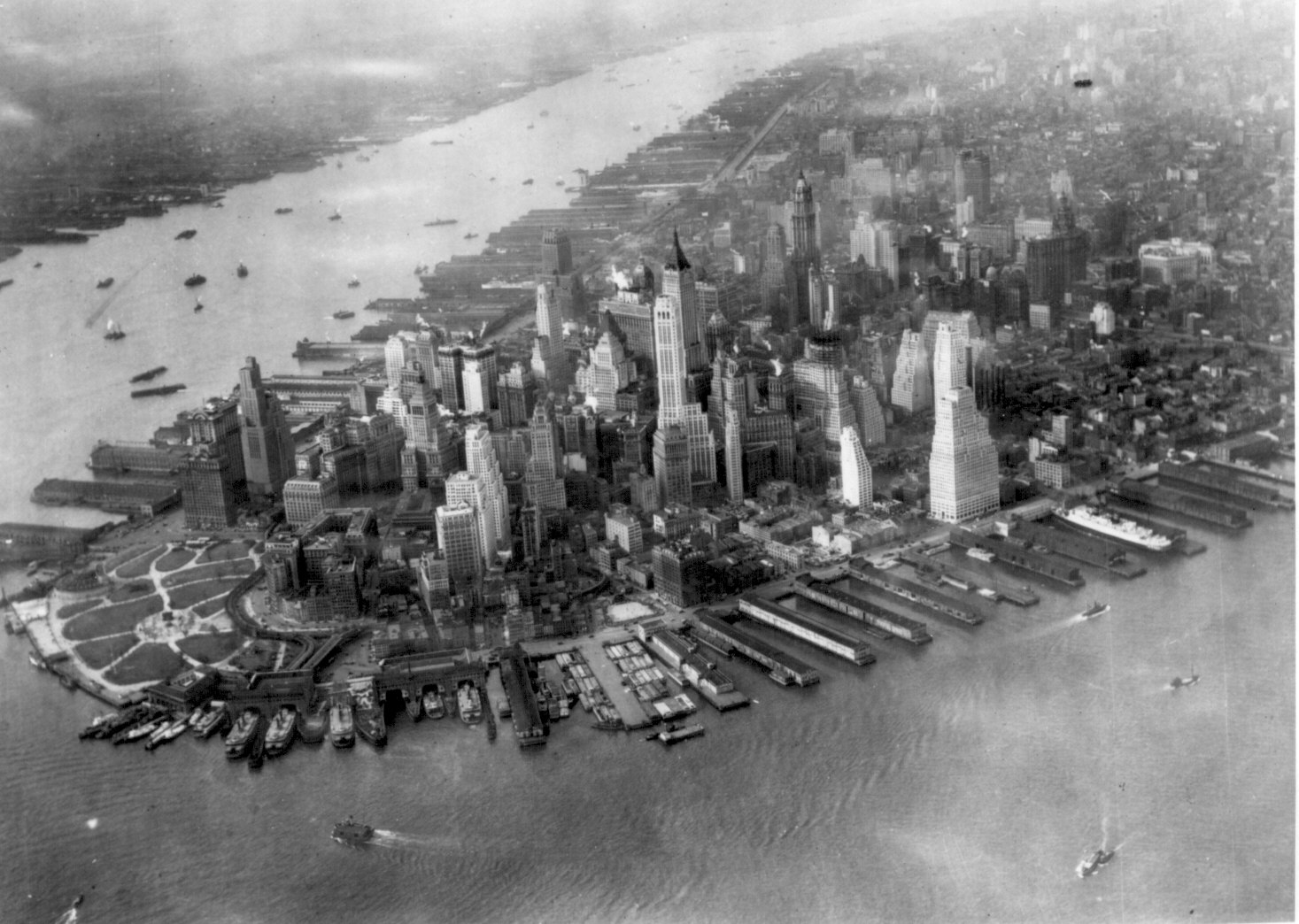
Header: Lower Manhattan, 1931
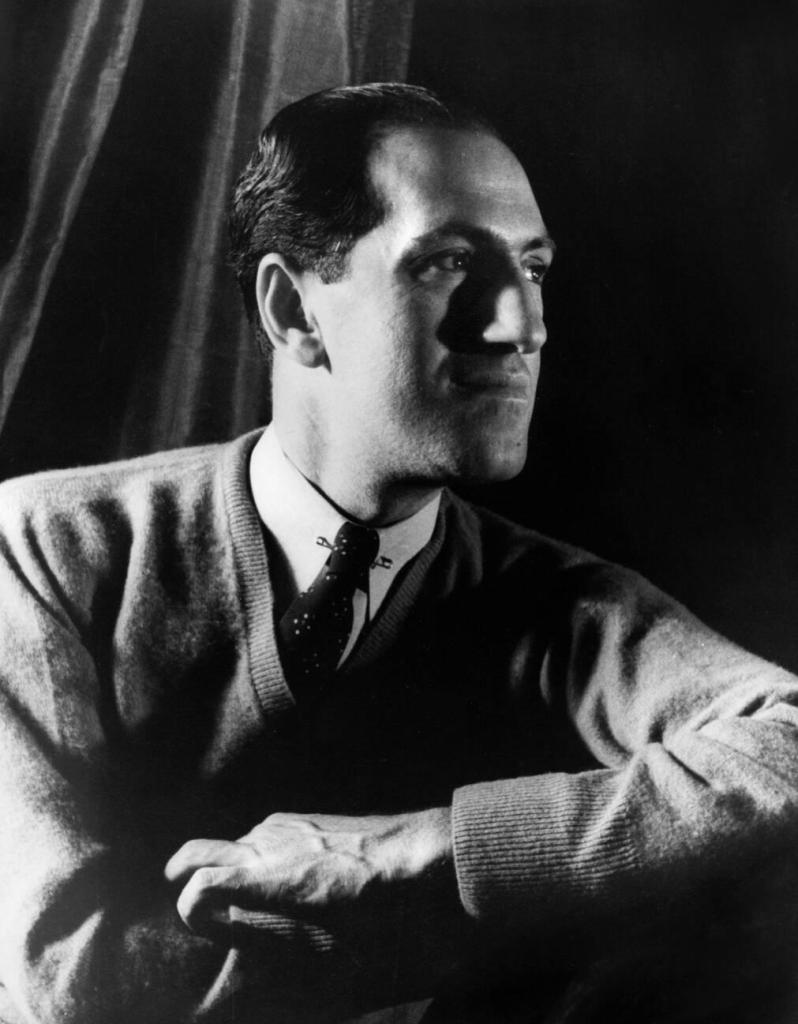
Body: George Gershwin, 1937
Leave a Reply