
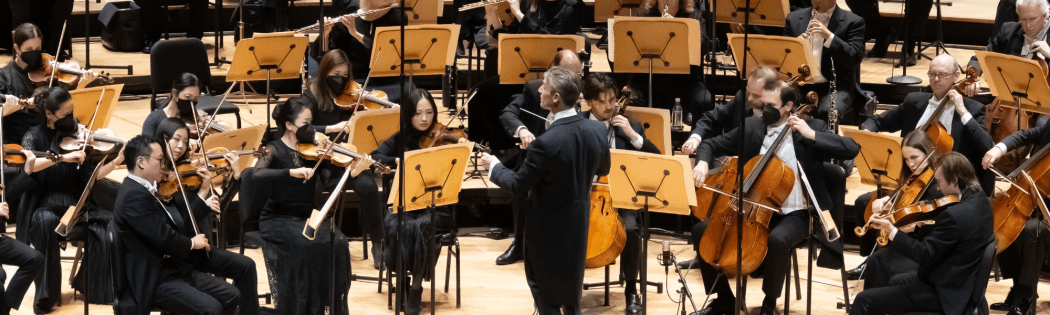
Beyond the Notes: Maestro Shelley Breathes New Life into Beethoven’s Fifth
Beethoven’s Fifth Symphony is one of, if not THE, most familiar pieces of music in history. With so much cultural awareness attached to it, a conductor is posed with an interesting puzzle: how do you make it come alive for an audience that’s heard it 1,000 times before? What do you do to avoid sounding cliché?
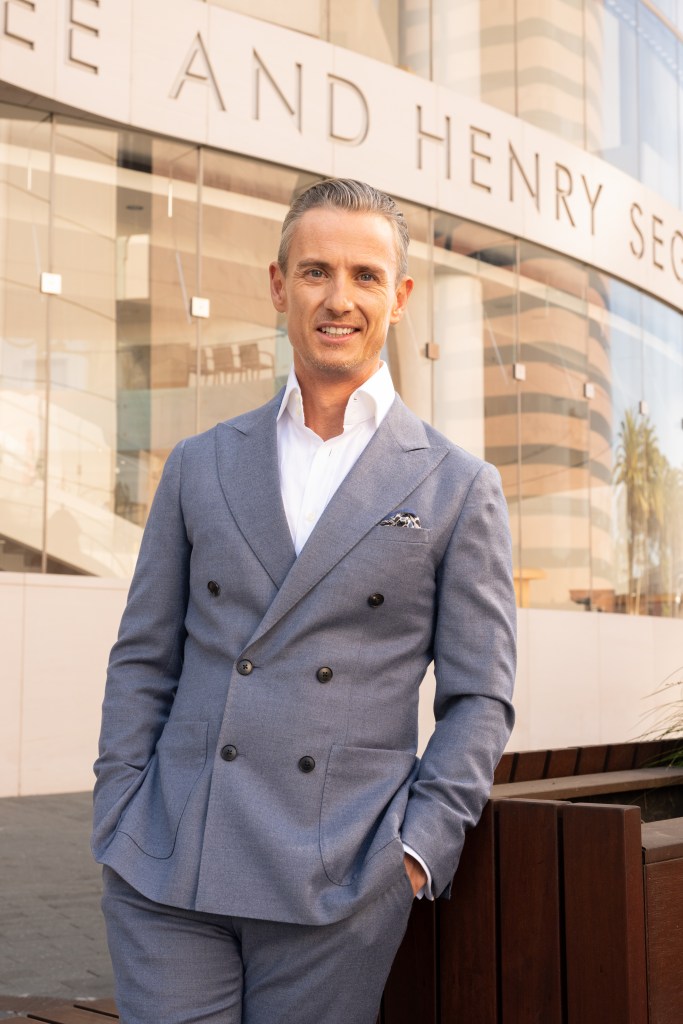
For Pacific Symphony’s Artistic and Music Director Designate Alexander Shelley, who conducts the work May 1-3, the task isn’t as daunting as you might expect.
“The fifth is like visiting the Sistine Chapel or reading Jane Austen or Shakespeare,” he says. “It’s breathtaking whenever you do it. That’s why it’s an icon of human culture, one of the great works of humanity. But it’s also a great cultural pillar. It sustains different interpretations, and the differences are really varied, even within eras.
“With so many different approaches, there are some very important factors in interpretation.
Beethoven’s own metronome marks are always in debate. Some people like it slower, some even say that Beethoven didn’t know how to use the metronome. That’s been debunked, but there is an unbelievable urgency in a lot of his music, and that speaks to the man himself.
“There was an era in which this kind of music was viewed as noble and majestic, something that’s elevated above the everyday mundanities, something that’s close to God. The essence of his striving is to come as close to human experience as possible.
“At its core, this is about emancipation, about moving from dark to light. The first movement is the most famous, but the arrival, my favorite movement, is the finale. This is breaking the shackles of fate and darkness. He’s showing you as a creative artist that we can all be emancipated, and enlightened, that we can find this light and joy at the end. The fifth was a precursor to the ninth, and when I’m performing it, I have the message of the piece as an artist making a philosophical and political statement with a piece of art, and the rest flows from there. I want to capture the muse, that’s key to transmitting that message.”
With a piece that carries so much meaning, how do you balance the actual work that needs to be done on the podium? What is the inner life like when at the same time there are cues to be met, and tempos to enforce?
“If audience members think of any discipline, of acting, or a sport, or having a conversation, of any other areas of human endeavor where what is important is the outcome, not the process, then they understand as a conductor or pianist or violinist, that if you’re thinking ‘How do you get round the piece, what bowing do you use, etc.,’ then you’re not in the point of the piece. You have to be in flow, the mechanics need to be second nature, entirely internalized. You need to be oriented toward the essence of the work, the message that it’s trying to transmit to people and to you.
“What we do on stage is an unbelievably sophisticated act. You are coordinating 80 people who are all masters of their instruments but it’s all for nothing unless they’re in perfect synchronicity. It’s flowing, like a murmuration of birds, moving as one with the conductor at the center, and when it is going well, it really is a symbiosis between the gestures of the conductor and the music making of the orchestra: a oneness. So you have to be in that flow of recognition of every moment. When I start the symphony I have the end in sight: what does this mean in connection with where we’re going, and how do I create an arc of emotion that resolves in 45 minutes time and lifts the spirits, the essence of the listeners and ourselves?”
Before you head to the concert, May 1-3, don’t forget to check out this very special video message from Maestro Shelley before he returns to Pacific Symphony in a couple of weeks.