
Carmina Burana
If the apocalypse has a soundtrack, it’s “O Fortuna” from Carl Orff’s Carmina Burana.
Are there more terrifying, hair-raising opening measures? The thunderous timpani strike followed by a fleeting hushed and portentous pause, and then the massive chorus of voices bewailing fate at full volume before dropping to a menacing whisper? It conjures up desolation and destruction, fire and flood, war and famine. Movies that have turned to “O Fortuna” to articulate the spirit of imminent disaster include “The Omen” and “Natural Born Killers.” When something more horrific than words has taken place, in steps Orff.
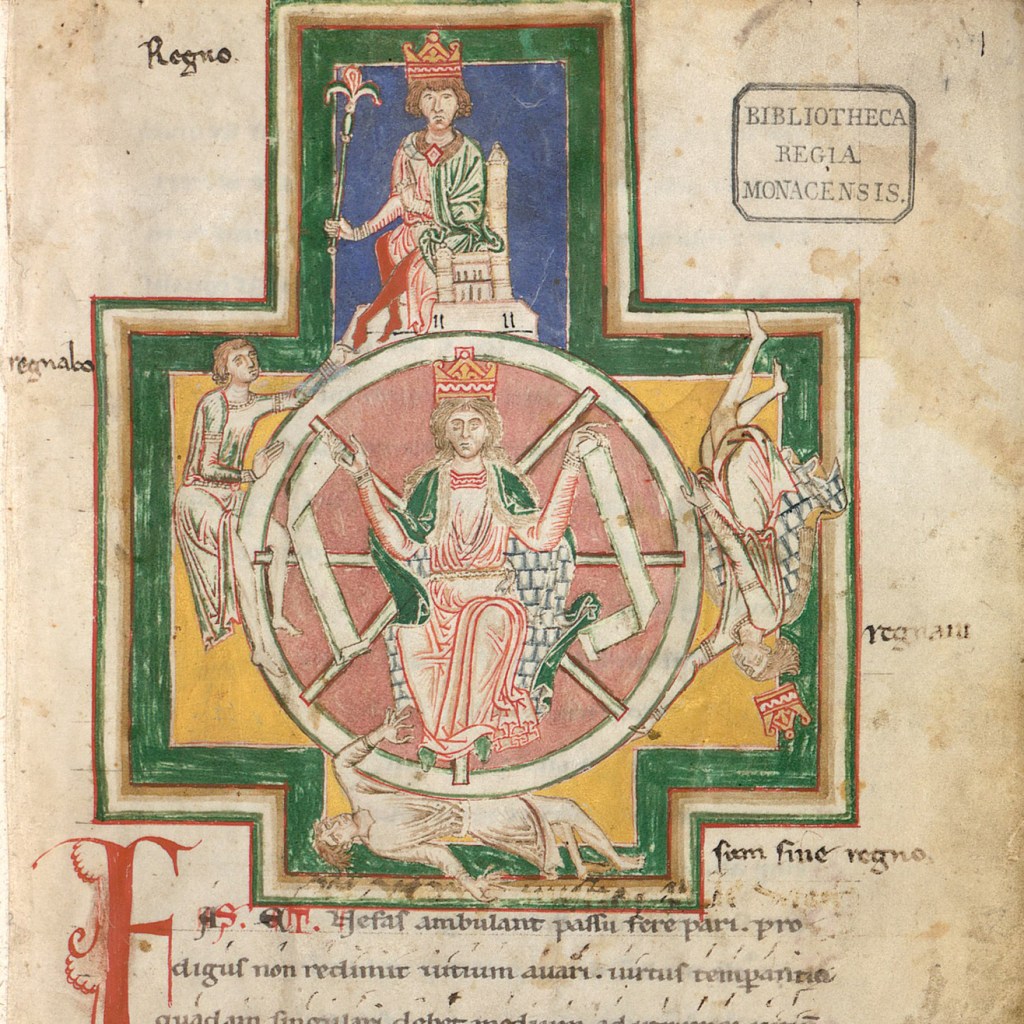
That said, we as a species must have a pretty developed taste for horror. Carmina Burana met with resounding success from its premiere in 1937 and in modern polls it consistently ranks among the most popular works of the Western canon.
To be fair, horror is only a small portion of the work. Carmina Burana (or “Songs of Beuern”) is a collection of 24 Medieval poems written in Latin, old French and old German, in praise of feasting, gambling, drink, dance and sex. The horror bookends these poems, giving the crude and debauched life a cautionary frame.
And while the poems are thought to have been written by European clergy, it bears explaining why the poems are unapologetically erotic, rooted in carnal pleasures and an awareness of life’s fleeting nature. The poetic clergy in question are called “goliards,” young clerics who are poking fun at the Church. The law of primogeniture, of the first born male’s right to inherit land and titles, meant that many aristocratic second-born sons were placed in religious orders to train as clergy against their will. It’s reasonable to consider Goliard poetry as a reaction to the exigencies of these clergymen’s fates. As journalist Scott Horton says, “it rings with a passion for life, a demand to seize and treasure the sweet moments that pitiful human existence affords.” In other words, the Goddess of Fortune has our number, wealth and fame and everything else we chase is just a chimera, so enjoy yourself while you can.
Orff found a collection of these earthy and ribald poems in a used bookstore in 1934 and turned to Michel Hoffman, a law student and Classics enthusiast, to help him assemble a libretto. The work itself is much more than its music and lyrics, though. Orff envisioned Carmina as a “scenic cantata,” intending that performances also draw from choreography, stage action and visual art. The premiere was true to Orff’s intent, but modern performances largely shy away from Orff’s extra-musical visions.
The music itself draws its power from Orff’s simplicity. The compositional language is direct, unadorned. Melodies and rhythmic patterns are relentlessly repeated, the musical forms themselves are uncomplicated. We’re not in the realm of fugue here. Orff is making his point not with a scalpel but with a broadsword.
Orff himself knew what he’d accomplished. Following the premiere, Orff told his publisher: “Could you please get rid of everything I have written up to now and that has unfortunately been published by you? With Carmina Burana my collected works begin.”
Ironically, for most people that is where they end as well. Carmina Burana is the first of Orff’s Trionfi, a triptych of scenic cantatas, the others being Catulli Carmina (Songs of Catullus), and Trionfo di Afrodite (Triumph of Aphrodite). Neither of the other two are performed nearly as much as Carmina Burana. In addition, Orff wrote dozens of cantatas and operas, many compositions for solo voice, chamber works and orchestral works, not to mention his vast contributions to childhood musical education. Yet despite his productivity, he’s like Dukas (“The Sorcerer’s Apprentice”), and Liadov (“The Enchanted Lake”): a supremely gifted artist whose legacy continues largely through a solitary work.
Don’t miss it live as the finale to Pacific Symphony’s next classical concert, Feb. 27 – Mar. 1 at 8 p.m. Prefer an earlier showing? Come to the Sunday matinee on Mar. 2. You’ll not only get to enjoy the piece by itself but also additional commentary by Music Director Carl St.Clair.
From the Archive: The video below features behind-the-scenes footage from a 2019 rehearsal.