
In honor of Hispanic Heritage Month (September 15 – October 15), this blog takes a look at some of the many ways Latin American composers and musicians have had an enduring impact on classical music. We’ll also take a step beyond the realm of classical music and right into the rich history and cultural celebrations taking place in the wonderful Orange County which we call home.
The theme of Hispanic Heritage Month 2026 is “Pioneers of Change: Shaping the Future Together.” This theme is easily explored through the lens of classical music: keep reading for a quick look into 5 Latin American and Hispanic composers you should know.
- Arturo Márquez (b. 1950): A Mexican orchestral composer who incorporates forms and styles native to Mexico. He has written dozens of works and has been the recipient of several prestigious awards: he was the first musician to receive “La Medalla De Oro De Bellas Artes Mexico” (Gold Medal of Fine Arts of Mexico), and he has also received the National Prize for Arts and Sciences (Mexico), the Madella Mozart (Austrian Embassy), and several honors through live performances in Germany and Latin American music festivals. Pacific Symphony recently performed Marquez’s Concerto for Guitar Mystical and Profane with Pablo Sainz-Villegas on the guitar and Alexander Shelley conducting.
- Pauline Oliveros (1932-2016): An American composer and accordionist of Tejana descent from Texas. She is well-known for her contributions to the field of contemporary classical music, specifically experimental and electronic music. In addition to her composition and books, Oliveros developed the term “deep listening,” a concept designed to inspire anyone from a trained performer to an untrained listener to practice the art of listening and responding to environmental conditions while playing solo and in ensembles
- José Pablo Moncayo (1912-1958): A Mexican pianist, percussionist, conductor, and composer who joins the ranks of Mexican artists like Silvestre Revueltas and Carlos Chavez (Moncayo’s teacher) in terms of his legacy in Mexican art music. His work was focused on incorporating idioms from Mexican folk music into the Classical vernacular. During the summer of 1942, Moncayo studied composition at Tanglewood at the invitation of great American composer Aaron Copland.
- Gabriela Lena Frank (b. 1972): An American pianist and composer. Her work draws on her multicultural background, especially her mother’s Peruvian heritage, creating the sounds of Latin American instruments (like the Peruvian pan flute or charango guitar) through traditional Western classical instruments. She is the winner of the Pulitzer Prize in Music for 2026 for her storytelling in the programmatic work Picaflor: A future myth commissioned and presented by the Philadelphia Orchestra conducted by Marin Alsop. Her music reflects her personal experiences as a multi-racial Latina as well as her studies of Latin American cultures, native musical styles, poetry, and mythology in a way that is entirely unique to her.
- José Elizondo (b. 1972): A Mexican-born composer with degrees in Music and Electrical Engineering from the Massachusetts Institute of Technology. He has a dual career as a composer and an engineer, focusing on speech-recognition technology. Though he does not play the cello, he is perhaps best known for his compositions for the instrument, and his music is performed by artists like Yo-Yo Ma and Sheku Kanneh-Mason.
Don’t let your curiosity fizzle out now! This is only a brief glance at how deep this topic can go.
Latin American music is an expansive genre – geographically, it usually refers to the Spanish or Portuguese-speaking regions of Latin America, but it can also encompass Latin American styles of music emerging from Francophone countries, Caribbean territories, South America, and the United States. Think of all the Latin genres of music and dance: Salsa, Tango, Reggaeton, Merengue, Bachata, Bossa Nova, Cumbia, Latin Jazz, Mariachi – the list goes on. Let’s zoom in on the history of these types of music right here in Southern California!
Music and the Chicano Movement
During the 20th century, Chicano art and music was driven by heightened political activism and energized cultural pride. Southern California, and Los Angeles specifically became a hub for Mexican artists blending homegrown styles like Latin swing and Chicano rock and roll with influences from African American jazz, R&B, and other Latin genres. Like many forms of music, Chicano music blends emotional expression with storytelling and cultural heritage. This music shares stories to amplify the voices of their community, with themes like struggle and resilience that resonated deeply with working-class Latinos. To hear current music from this category, listen to music by Los Lobos, Chicano Batman, and Las Cafeteras (among others). Latin American music in Southern California is a mirror and a maker of culture, preserving traditions while constantly reinventing them to reflect the evolving identities of its communities.
Latin American and Chicano Music in Present-Day Orange County
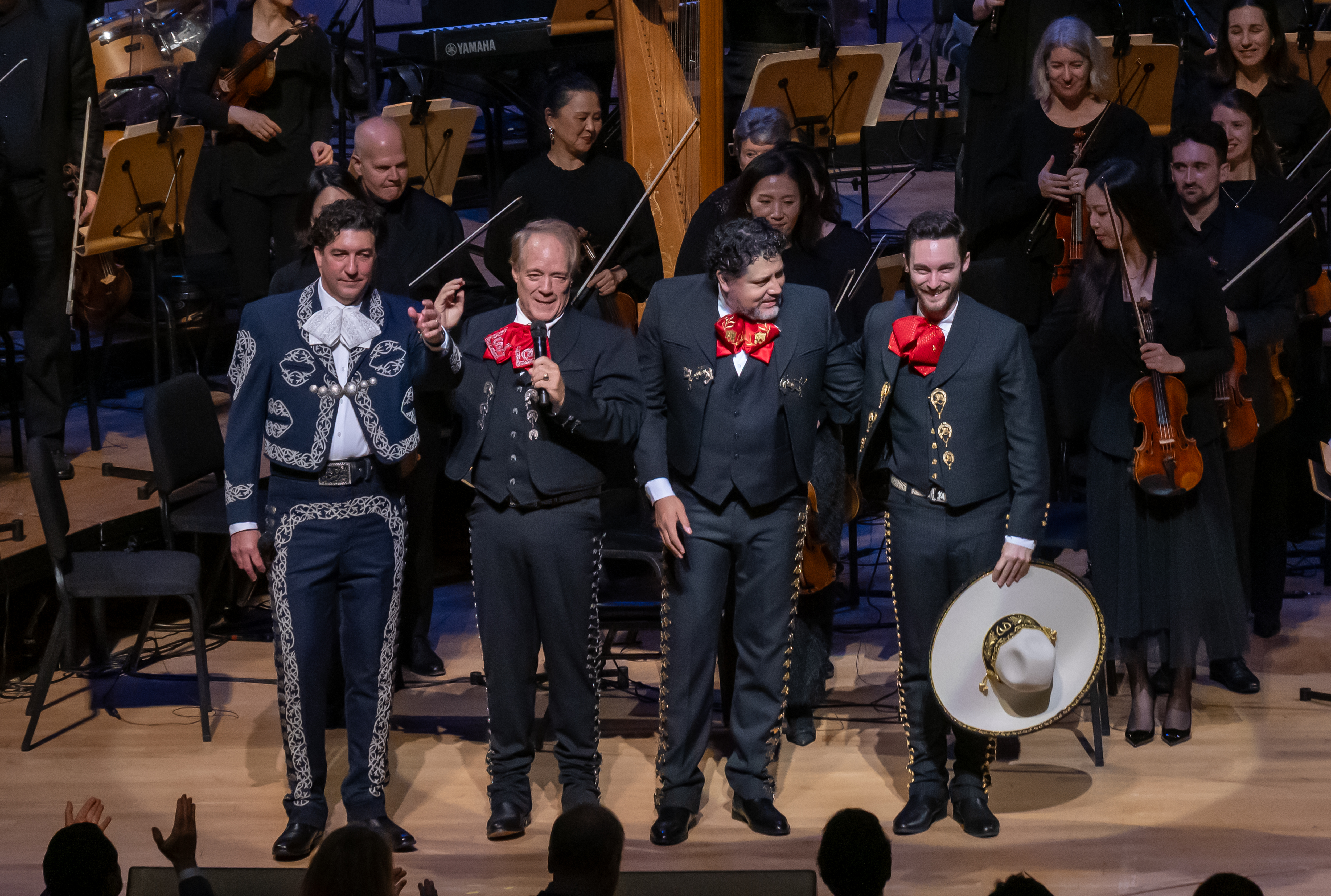
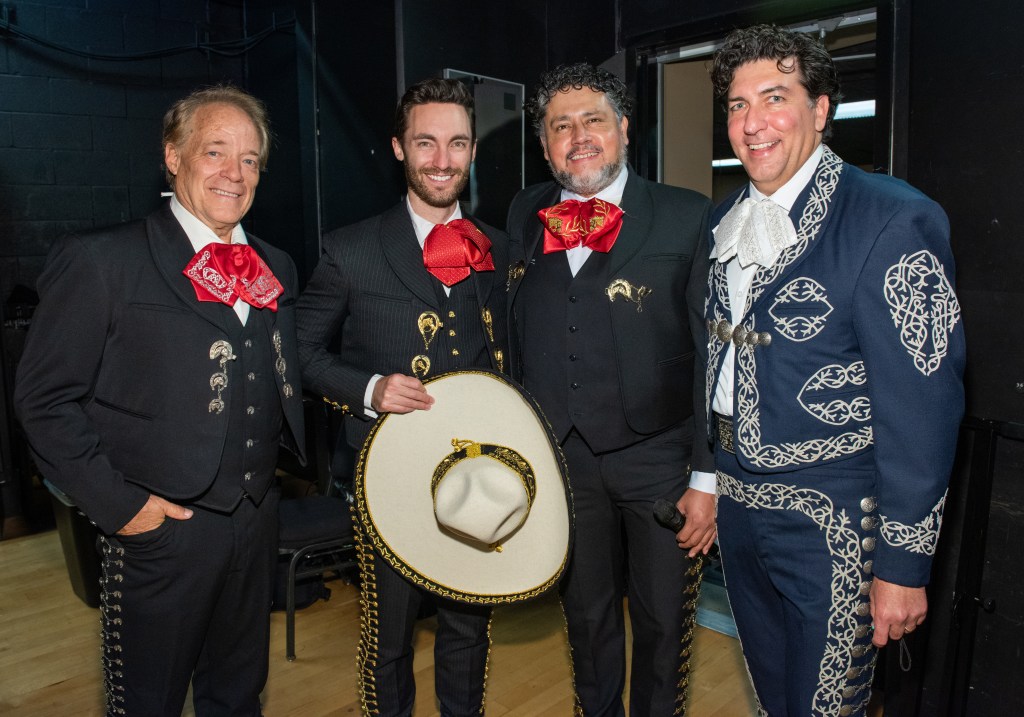
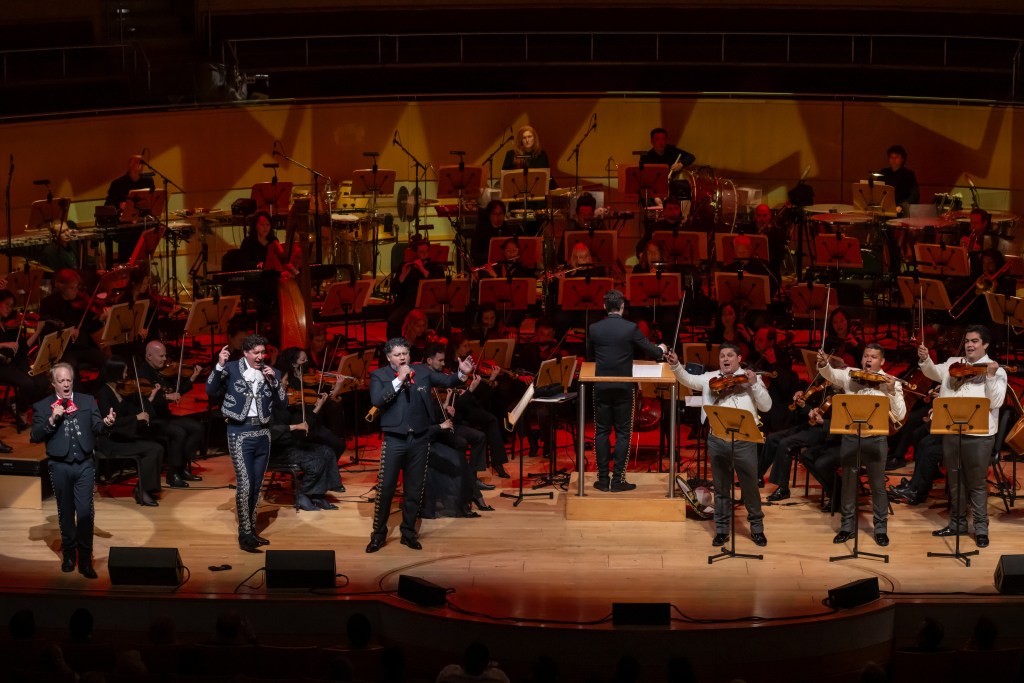
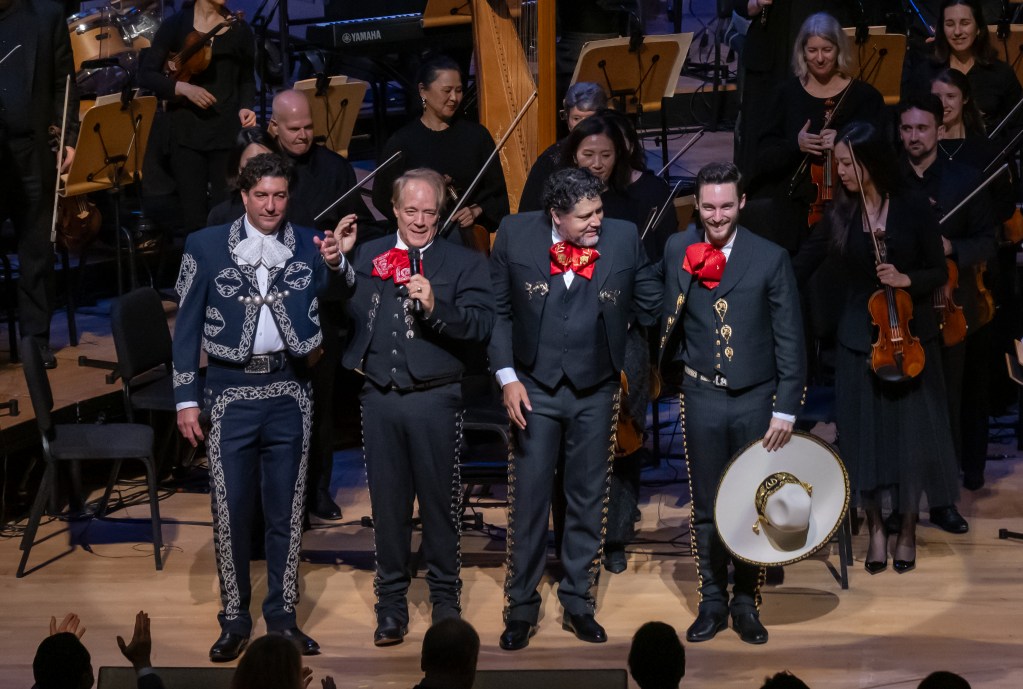
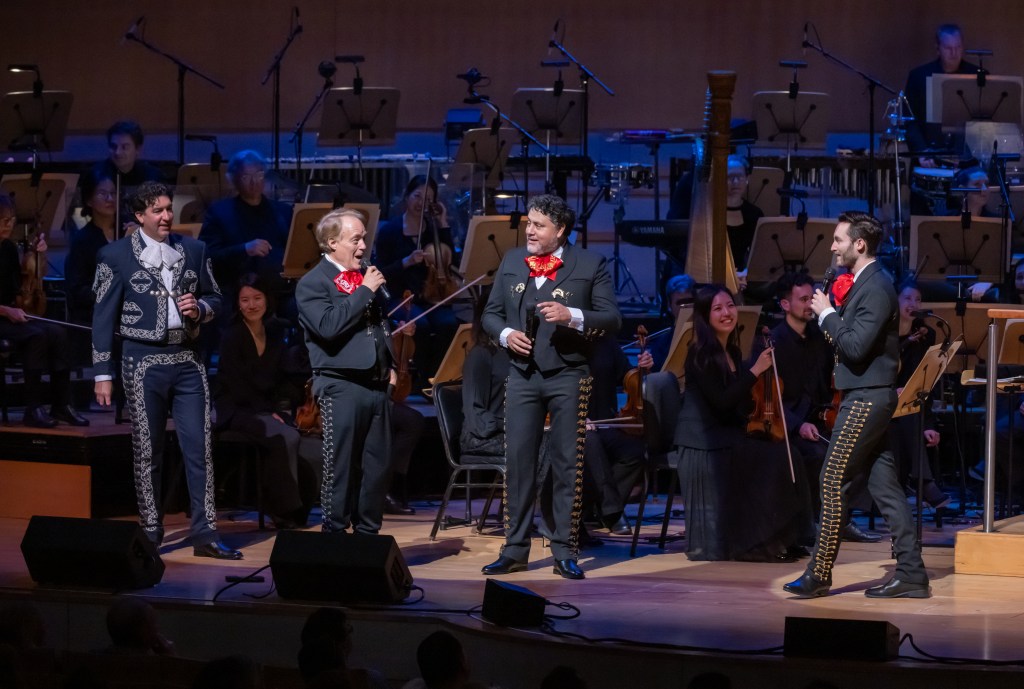
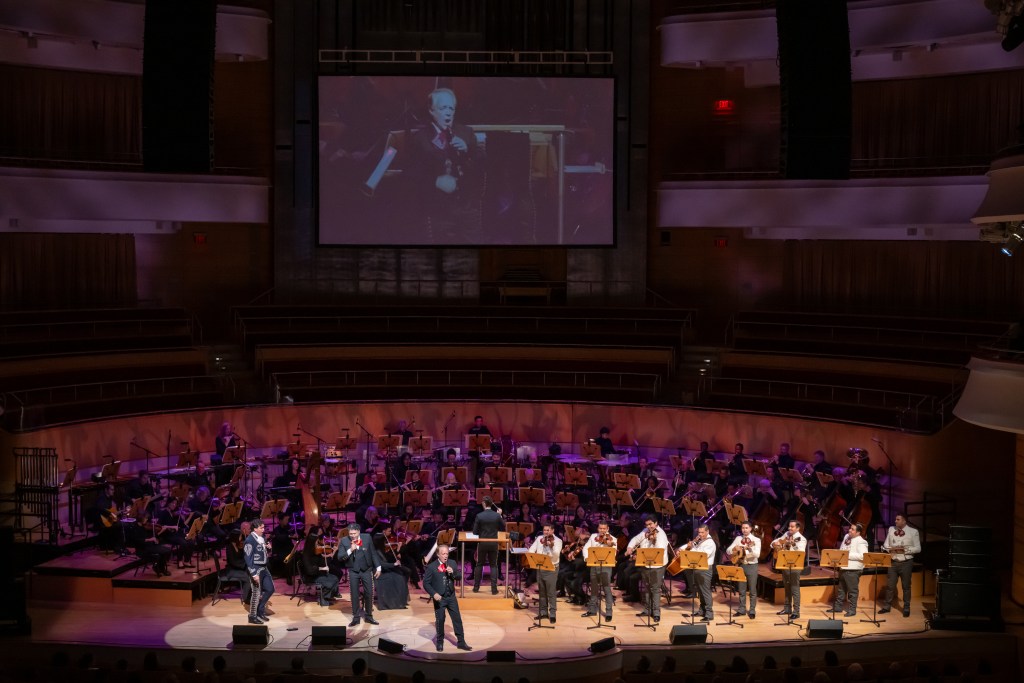
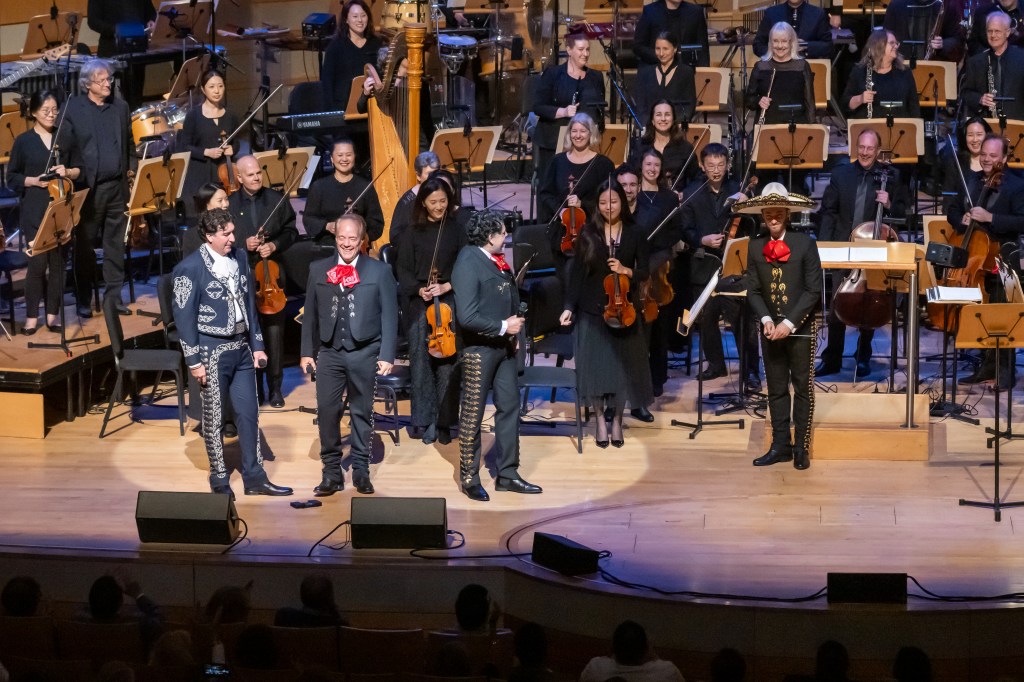
To this day, Latin American and Chicano music is thriving in Orange County. You can find live performances in restaurants, community events, dance classes, schools, and concerts around the county. In May 2026, Pacific Symphony welcomed the Three Mexican Tenors (Jorge Lopez-Yañez, Bernardo Bermudez, and Alfredo Carrillo) and Mariachi Garibaldi de Jaime Cuéllar to the stage at the Renée and Henry Segerstrom Concert Hall in Costa Mesa with Enrico Lopez Yañez on the podium. The program contained songs from classical tenor repertoire to traditional Mariachi music. From the moment the conductor sat down for the pre-concert Cocktails with the Conductor, the crowd was buzzing with the shared energy and memories brought on by the music and the cultural celebration.

OC Public Libraries hosts several events for Hispanic Heritage Month, listed here. This year, they are featuring latin and pop band Trio Renacimiento for a Music Appreciation Series throughout the month. They will have performances throughout the county. OC Public Libraries has planned several other events focused on food, art, games, and history. It is a great opportunity to connect with your community!
Celebrate this year’s Hispanic Heritage Month by listening to some of the composers mentioned in this blog. Also, as briefly mentioned earlier about this type of music and its wide reach – you can hear similar influences through the Spanish-themed motifs in Édouard Lalo’s Symphonie Espanole, the most celebrated piece by this French composer. You can hear this piece performed live by Joshua Bell and Pacific Symphony in the Opening Night of Alexander Shelley’s Inaugural Season with Pacific Symphony on September 24, 2026 at 8pm. Get tickets!

Leave a Reply