

The Power of Puccini’s “Once Upon a Time”
In the late 19th century, the verismo movement dominated the opera world. With its intense emotions, contemporary relatable characters, and realistic locations, verismo marked a major shift away from the more far-fetched opera plots seen earlier in the century. Sitting at peak of this movement was Giacomo Puccini. Puccini and his librettists replaced mythic Valkyries, tortured hunchbacks, and scheming devils with a jealous opera singer in Rome (Tosca), young bohemians in Paris (La boheme), and a young woman left to raise a child alone in Japan (Madama Butterfly). Why, then, for his final opera, did this master of realism buck tradition by choosing the story of a vengeful princess, unbelievable trials, and a mysterious prince set in mythical ancient China? What value could Puccini have seen in writing a fairy tale, a genre typically reserved for children?
In his 1976 landmark book on child psychology, The Uses of Enchantment, Bruno Bettelheim writes:
For those who immerse themselves in what the fairy tale has to communicate, it becomes a deep, quiet pool which at first seems to reflect only our own image; but behind it we soon discover the inner turmoils of our soul – its depth, and ways to gain peace within ourselves and with the world, which is the reward of our struggles.
Fairy tales allow the child “to bring some order into the inner chaos of his mind so that he can understand himself better.” Just as Puccini’s verismo operas allowed audiences to connect with authentic, relatable emotions, I believe the composer also understood the implicit value of fairy tales as a vehicle for self-reflection and understanding. By infusing a fairy tale with verismo sensibilities, Puccini shows us the story’s raw emotional potential and invites even the most cynical among us to find a path towards self-discovery.
To prime us for that journey tonight, we will experience the opera through the eyes of Bettelheim’s purported target fairy tale audience: the reading child. Rather than be put off by the story’s implausible plot, the reader is drawn in further until he himself becomes the hero of the story. Without hesitation, the child creates a mythic, reality-defying world. Without the constraints of realism, he can adventure freely, risk danger, and boldly stand up to those who would do him harm.
I encourage us all to follow the reader’s example tonight. Immerse yourself in Puccini’s fairy tale. Immerse yourself in the vivid costumes, puppets, and lighting the reader envisions. And give yourself permission to jump headlong into the “deep, quiet pool” of the story to ultimately understand yourself better.
-Eric Einhorn
Watch our Opera Focus Behind-the-Scenes discussion with Eric Einhorn here.
See Pacific Symphony’s semi-staged production of Turandot on April 16, 18, and 21. Get tickets.
Pictured in this blog:
- Header image: Il vasto piazzale della Reggia, set design for Turandot act 2 scene 2 (1924)
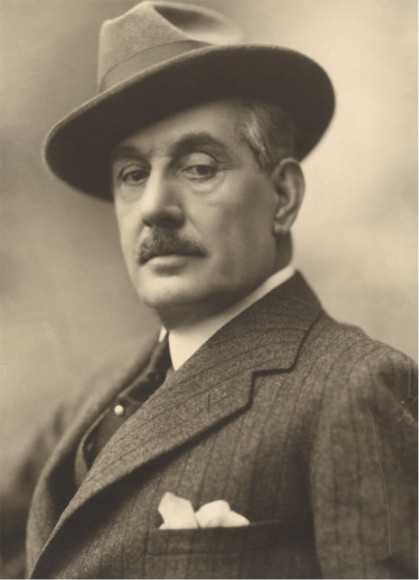
- Body image: Giacomo Puccini (1910)

Leave a Reply