
“Carmen”: The Scandalous Birth of a Classic
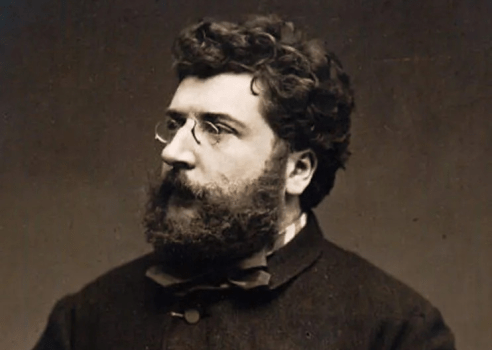
“Carmen,” George Bizet’s risqué tale of love, lust and murder, has a backstory worthy of its subject. One of the most beloved and popular operas in the world was born amid scandal, controversy, and a stubborn artistic vision that defied the conventions of its time. “Carmen’s” creation is a tale of clashing personalities, a determined soprano who shaped its iconic lead role, and a premiere that wasn’t exactly a triumph.
The opera’s journey began with a controversial choice of source material: Prosper Mérimée’s novella of the same name, a gritty tale of a fiery, independent Romani woman and her obsessive, ultimately murderous lover. In the respectable world of 19th-century Parisian opéra-comique, a genre more comfortable with lighthearted and morally upright stories, this was a shocking proposition. The director of the Opéra-Comique, Adolphe de Leuven, was appalled by the idea of depicting such a “vile” and “immoral” character in his theater, let alone her brutal on-stage murder. He famously pleaded with the librettists, Henri Meilhac and Ludovic Halévy, to give the story a happy ending. Bizet, however, was firmly committed to the raw realism of the story. He wanted a warts-and-all Carmen.
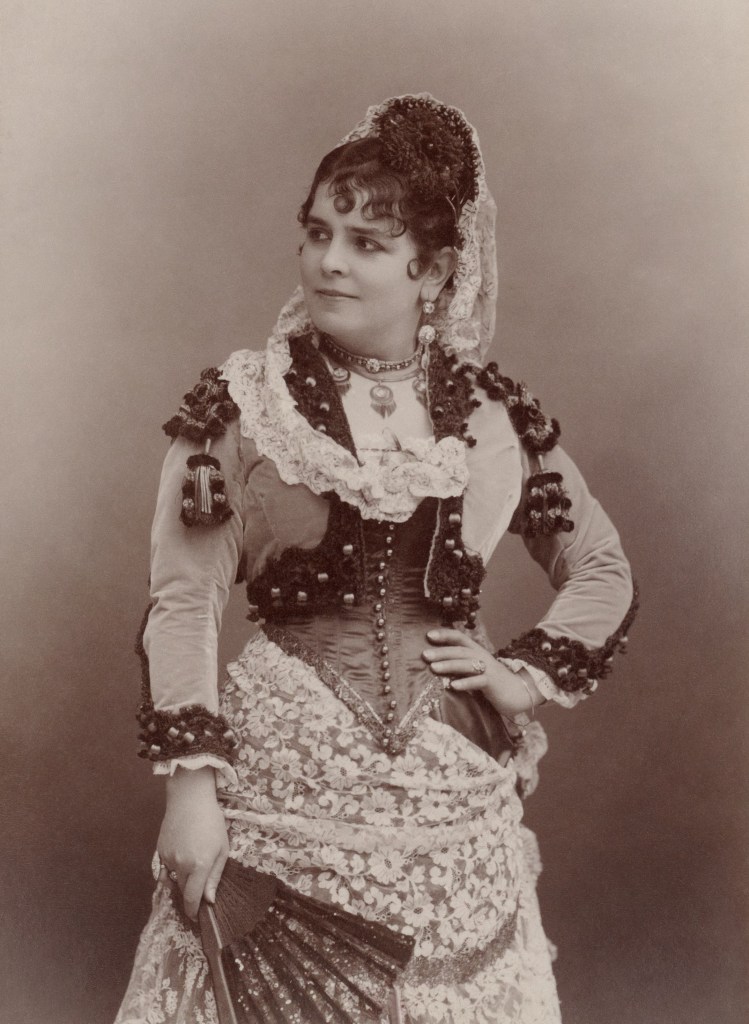
Adding to the simmering tensions, Célestine Galli-Marié was chosen for the title role. A formidable talent with a fiery personality to match, Galli-Marié wasn’t satisfied to be a mere vessel for the composer’s creation. She played a crucial role in shaping the character of Carmen, infusing her with a provocative and untamable spirit that both enthralled and scandalized.
During rehearsals, Galli-Marié rejected Bizet’s conventional entrance aria, claiming it didn’t capture the essence of the character. She demanded something with more flair. The result was the iconic “Habanera,” a melody borrowed from a popular song by Sebastián Iradier, which Bizet initially believed was a folk tune. This collaborative and sometimes contentious process between composer and soprano helped to forge the unforgettable Carmen we know today.
The opera’s premiere on March 3, 1875, wasn’t a resounding success. While not the outright failure that some historians have described, it was met with a cool and, in some quarters, hostile reception. The starchy Parisian audience was taken aback by the opera’s realism, its depiction of working-class life, and the unapologetic sexuality of its heroine. The on-stage murder of Carmen in the final act was a show-stopper—and not in a good way.
Bizet, who had poured his heart and soul into “Carmen” and was already in fragile health, died of a heart attack just three months after the premiere, at the age of 36. He never lived to see his final masterpiece achieve the global acclaim it enjoys today. But the myth of the opera’s “failed” premiere was, in fact, a romanticized tale that gained traction after his death, fueled by the directorate of the Opéra-Comique to generate renewed interest in the work. The truth is that “Carmen” was not an immediate flop but a slow-burning success, an opera too far ahead of its time for its first-night audience to understand or embrace.
Three little-known facts about “Carmen”:
Despite creating a score that vividly evokes the atmosphere of Seville and the Spanish countryside, Georges Bizet never actually visited Spain. His entire conception of the country was built through research, literature, and his own imagination.
The rousing “Toreador Song,” sung by the bullfighter Escamillo, is one of the most recognizable melodies in all of opera. However, the central word of its title is an invention. The correct Spanish term for a bullfighter of Escamillo’s stature is torero. Bizet and his librettists needed a word with an extra syllable to fit the rhythm of the music. So “toreador” was created for purely musical and dramatic effect.
The character of Micaëla, the sweet and virtuous village girl who represents Don José’s forsaken past, doesn’t exist in Prosper Mérimée’s novel that inspired the opera. The opera’s librettists felt they needed a foil to contrast with the fiery, independent Carmen. Micaëla’s presence serves to “soften” Don José’s character, making his descent into obsession and violence all the more tragic for the audience.
Hear the Carmen Suite live on Nov. 20-22, 2025 led by Artistic and Music Director Designate Alexander Shelley. Learn more.
Carmen is an exquisite work of drama, passion and music. I still have my 65 year old record version, featuring Victoria de los Angeles, Nicolai Gedda, Ernest Blanc, Janine Michaeau and the Orchestre National de la Radiodiffusion Française, Sir Thoman Beecham, conducting. As a young woman, I loved singing along to Michaela’s wonderful piece, “Parlez-moi de ma mère.”