

Vivaldi: The Four Seasons
It’s hard for us to imagine Antonio Vivaldi as a radical. Yet to 18th-century audiences, his masterwork, The Four Seasons, was like a breath of fresh air to some, a slap in the face to others. “Il Prete Rosso has gone crazy this time,” some must have muttered.
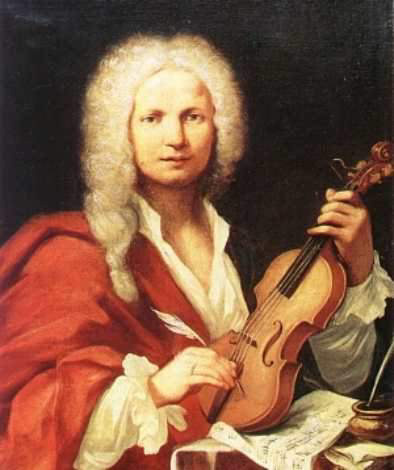
Of course, the renowned Venetian composer and virtuoso violinist had earned the right to experiment a bit. His long, prolific career produced more than 500 concertos, almost half of them for violin, as well as almost 50 operas. And by the time of his death in 1741 he was, along with J.S. Bach and George Frideric Handel, considered a giant of Baroque music.
True, there was a whiff of the unusual about Vivaldi.
His nickname, Il Prete Rosso (the Red Priest), was a reference to his long mane of curly red hair and his choice of profession. He didn’t follow the illustrious career paths of Bach and Handel. In September 1703, 24-year-old Vivaldi was appointed maestro di violino (master of violin) at the Pio Ospedale della Pietà (Devout Hospital of Mercy), a Catholic girls’ orphanage in Venice. He spent much of his career there in various roles, teaching music, conducting ensembles and writing music for his charges to play. And the “Priest” nickname wasn’t just because of his workplace. Vivaldi had actually studied as a priest for ten years and received his Holy Orders in 1703.
The Four Seasons was performed for the first time in 1723, in the middle of Vivaldi’s busy career. The four violin concertos, each consisting of three movements for soloist and string orchestra, raised eyebrows for their ambition: they were created to evoke the words of four sonnets (rumor has it they were written by the composer himself). Each sonnet describes a season, and instruments, not sung words, paint the picture.

The concept of “program music”–a score inspired by a non-musical source such as a poem, story or painting, or scenes from nature, or a personal experience–didn’t become popular until the Romantic period a century later. Neither did the idea of “word painting,” imitating a specific sound or shape with music. The Red Priest was way ahead of his time.
The Four Seasons is part of a larger collection of 12 Vivaldi concertos called “Il cimento dell’armonia e dell’inventione,” or “The Contest Between Harmony and Invention.” That title gets at the reason for Vivaldi’s inventiveness: he was fascinated by the struggle between the strict compositional rules of his time and the desire for spontaneous creativity.
Vivaldi’s creativity wasn’t confined to the musical staff. His desire to push instrumental music to new expressive limits can be seen in the score’s instructions. His suggestions include telling violinists to play “like a sleeping goatherd” or the viola players to imagine “a barking dog,” in order to suggest a scene described in the sonnets: “The goatherd sleeps, with his faithful dog at his side” (from “Spring”).
The Four Seasons was ahead of its time in other ways as well. The concept of a multi-movement symphonic concerto was rare in Vivaldi’s era. Highlighting a soloist and giving them something virtuosic and showy over an orchestral accompaniment opened the door to a beloved concert staple that became hugely popular over the next two centuries. You could argue that the cult of the flashy front-of-stage soloist, from the orchestra hall to the rock ‘n’ roll stadium show, started with Vivaldi.
Why not test how successful Vivaldi was at word painting? As you listen to The Four Seasons, watch for his musical interpretation of these lines from the sonnets:
From “Spring”:
“Festive Spring has arrived,
The birds salute it with their happy song.”
From “Summer”:
“But suddenly, the north wind appears.
The shepherd weeps because, overhead,
Lies the fierce storm, and his destiny.”
From “Autumn”:
“The mild air gives pleasure,
And the season invites many
To enjoy a sweet slumber.”
From “Winter”:
“As we run, we constantly stamp our feet,
And our teeth chatter in the cold.”
Concertgoers can experience Vivaldi’s famous The Four Seasons, Thursday-Saturday, Jan. 9-11 at 8 p.m. with Concertmaster Dennis Kim as soloist. The evening concert is complete with Strauss’ epic An Alpine Symphony. Learn more here.
